
Shopping for sensory regulation tools can feel overwhelming. One day your child loves their weighted blanket, the next they're refusing to wear their compression vest. Sound familiar?
Here's the thing: even well-meaning parents make common mistakes when choosing sensory tools. The good news? Occupational therapists see these patterns all the time: and they know exactly how to fix them.
Let's dive into the seven biggest mistakes parents make and the OT-backed solutions that actually work.
Mistake #1: Buying Medical-Looking Gear
The Problem: You order a weighted vest that screams "therapy equipment." Your kid takes one look and says "I'm not wearing that to school."
Why It Happens: Most sensory products were originally designed for clinical settings. Many companies just copy those medical-grade designs without thinking about how kids actually want to look and feel.
The OT Fix: Choose tools that look like regular clothing or accessories. Kids are more likely to use sensory supports that help them fit in, not stand out.
Real Solution: Look for weighted hoodies, compression shirts that look like athletic wear, or fidget jewelry that passes for trendy accessories. The goal is "stealth sensory support" that works without announcing itself to the world.

Mistake #2: Getting the Sensory Category Wrong
The Problem: Your child seems hyperactive, so you buy calming tools. But nothing works because they actually need alerting input, not calming input.
Why It Happens: Sensory behaviors can be confusing. A child who seems "overstimulated" might actually be seeking more input, not less.
The OT Fix: Occupational therapists ask a key question: "Is this the right sensory category?" Sometimes visual sensitivities present as attention problems, or seeking behaviors look like avoidance.
Real Solution: If calming tools aren't working, try alerting ones (and vice versa). A child who won't sit still might benefit from a textured seat cushion or fidget tool, not just a weighted lap pad.
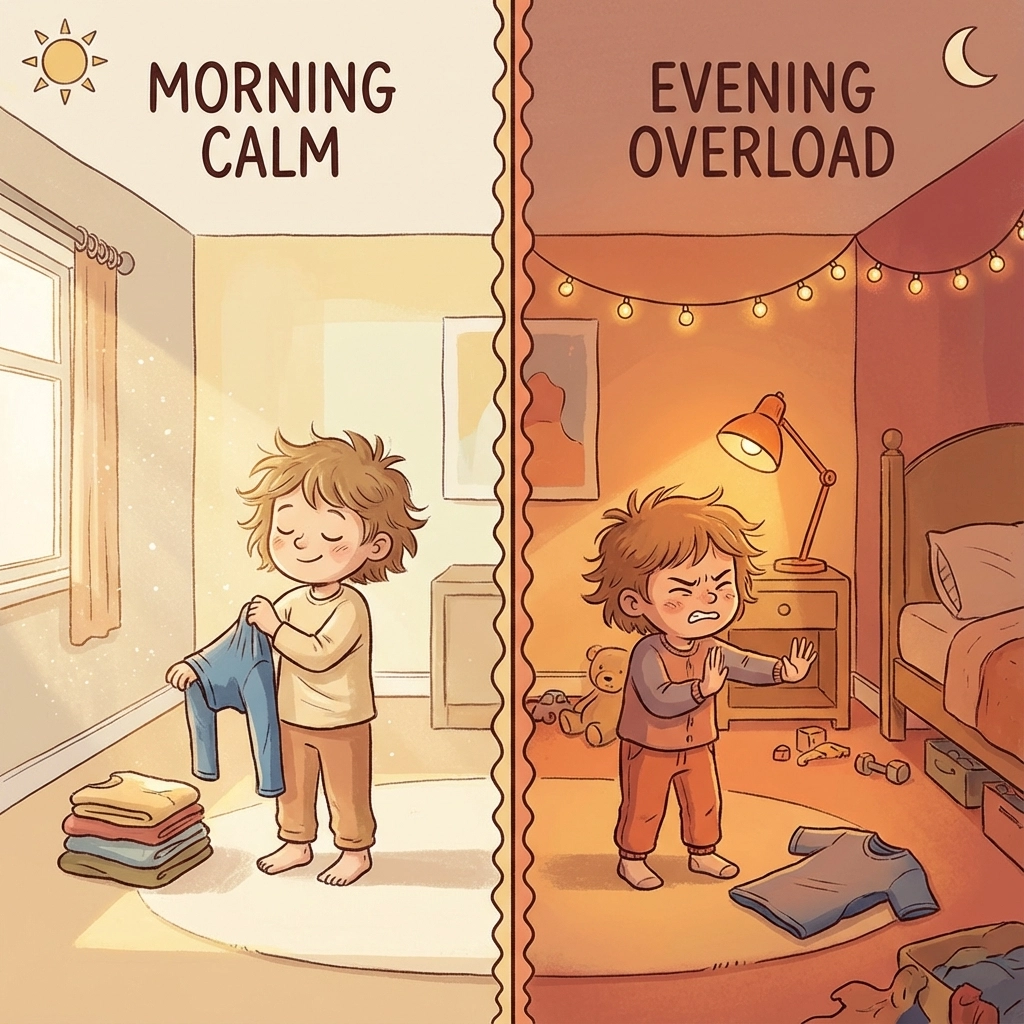
Mistake #3: Ignoring Timing
The Problem: The compression shirt works great at breakfast but causes meltdowns at dinner. You assume it's "not working anymore."
Why It Happens: Sensory needs change throughout the day based on stress levels, activities, and energy.
The OT Fix: Consider whether timing is the factor. Tools that work in the morning may be ineffective in the afternoon when your child is already overstimulated.
Real Solution:
- Use proactive tools in the morning (compression clothing, weighted items)
- Save reactive tools for when meltdowns start (noise-canceling headphones, comfort items)
- Have different tools for different parts of the day
Mistake #4: Focusing Only on Tools (Not Environment)
The Problem: You buy every gadget but never consider that the fluorescent lights in the kitchen might be the real culprit.
Why It Happens: It's easier to buy a product than to change your whole environment. Plus, kids can't always articulate what in their environment bothers them.
The OT Fix: Ask "Is this a tool issue or a systems issue?" Sometimes environmental changes: dimmer lights, less clutter, softer sounds: work better than personal sensory tools.
Real Solution:
- Try environmental changes first (lighting, noise, visual clutter)
- Use tools to supplement, not replace, a sensory-friendly space
- Remember: you can't gadget your way out of a chaotic environment
Mistake #5: Buying the Wrong Size or Fit
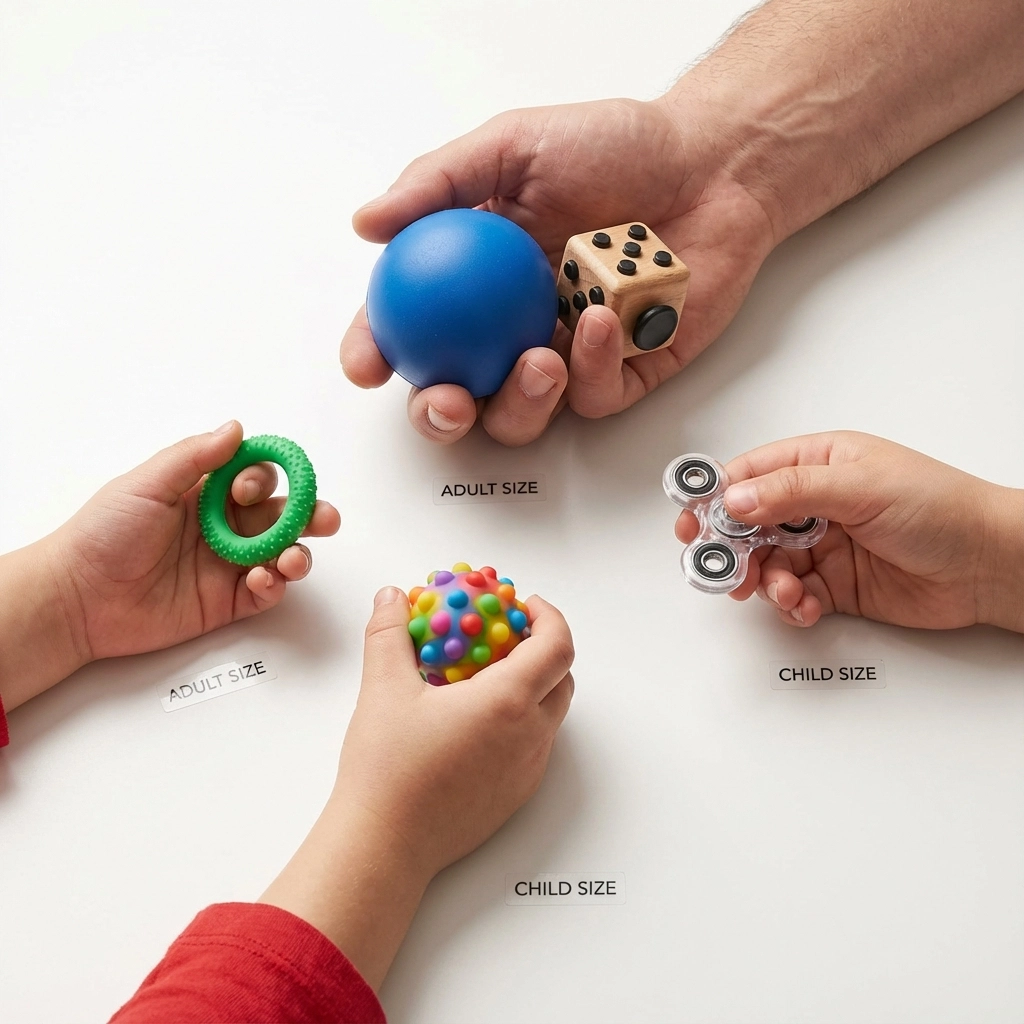
The Problem: The weighted blanket is too heavy, the compression shirt is too loose, or the fidget toy is too small for your child's hands.
Why It Happens: Sensory tools have very specific sizing requirements that aren't always obvious. A compression shirt that's too big won't provide deep pressure. A weighted item that's too heavy can be overwhelming instead of calming.
The OT Fix: Follow the 10% rule for weighted items (no more than 10% of body weight), ensure compression clothing fits snugly but not restrictively, and choose fidgets sized for your child's hands and developmental level.
Real Solution:
- Measure twice, order once: especially for compression clothing
- Start with lighter weights and work up gradually
- Look for companies that offer detailed sizing guides, not just general age ranges

Mistake #6: Not Involving Your Child in the Process
The Problem: You research for hours and order the "perfect" sensory tool. Your kid hates it and won't use it.
Why It Happens: What looks good on paper doesn't always feel good on a child's body. Plus, kids are more likely to use tools they helped choose.
The OT Fix: Include your child in selecting colors, textures, and styles. Even young kids can give feedback about what feels good and what doesn't.
Real Solution:
- Let them pick between 2-3 pre-screened options
- Start with one tool at a time, not a whole kit
- Ask "How does this feel?" and actually listen to the answer
- Return or exchange items that don't work (look for companies with good return policies)
Mistake #7: Forgetting About Stress Levels
The Problem: The fidget spinner works great during homework but fails completely during family gatherings. You think it's broken or your child is being difficult.
Why It Happens: High-stress periods require more sensory support than usual. A tool that works during calm times might not be enough when anxiety is high.
The OT Fix: Evaluate whether your child is in a heightened stress state where normal regulation tools need backup.
Real Solution:
- Have a "stress toolkit" with multiple options
- Layer supports during difficult times (compression clothing + fidget + noise-reducing headphones)
- Recognize that some days require more sensory support than others
- Don't abandon a tool just because it doesn't work during a meltdown
The Trial and Error Reality
Here's what every OT will tell you: finding the right sensory tools is "a method of trial and error to find what works best for each individual." Every child is different, and what works for one kid might not work for another: even if they have similar sensory needs.
What This Means for Parents:
- Don't expect the first tool to be perfect
- Keep notes about what works when
- Be willing to adjust intensity, timing, or combinations
- Remember that sensory needs change as kids grow

Making Smarter Choices
The key to avoiding these mistakes is thinking like an OT: consider the whole child, not just the sensory issue. Ask yourself:
- Will my child actually wear/use this?
- Does this address the right type of sensory need?
- How will this work in our real-life environment?
- What does my child say about how this feels?
Pro Tip: Look for companies that design sensory tools to look like regular clothing or accessories. When kids can get sensory input without looking different from their peers, they're much more likely to actually use the tools consistently.
Remember, the best sensory tool is the one your child will actually use. Sometimes that means choosing the "good enough" option that looks cool over the "perfect" option that stays in the drawer.
The goal isn't perfect sensory regulation: it's helping your child navigate their world with confidence and comfort. These OT-backed strategies can help you spend less time troubleshooting and more time watching your child thrive.