
Author’s note: This is for informational purposes only. For medical advice or diagnosis, consult a professional.
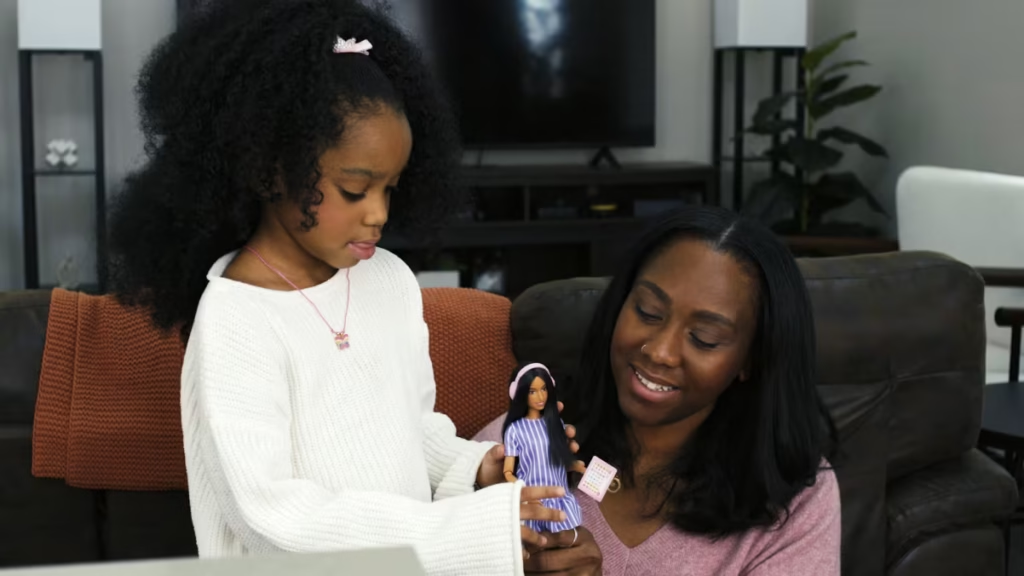
In a world that is increasingly recognizing the importance of neurodiversity, Mattel has taken a monumental step forward. Their latest release—the first-ever Barbie doll on the autism spectrum—is more than just a toy; it’s a powerful tool for representation, empathy, and wellness.
Based on the recent CNN report, here’s why we think this release is a “magical” milestone for the autistic community and what it means for the future of inclusive play.
Representation That Truly Resonates
For five-year-old Mikko, seeing herself in a doll wasn’t just about hair color or outfits. It was about the details that define her daily experience. The new Barbie comes equipped with oversize noise-canceling headphones and a fidget spinner—items that many autistic children use to navigate a world that can often feel overstimulating.
When children see their own lived realities reflected in a global icon like Barbie, it validates their identity. It tells them: You are seen, you are normal, and you belong.
Mattel worked with the nonprofit Autistic Self Advocacy Network to design the doll, which aims to represent the roughly 1 in 31 children who are diagnosed with autism by age 8 in the United States.
CNN’s Jacqueline Howard
The “Wellness” of Inclusion
The CNN article highlights a critical link between representation and mental wellness. For neurodivergent children, “wellness” isn’t just about physical health; it’s about emotional safety and social acceptance.
- Reducing Stigma: By integrating autistic traits into a mainstream toy, Mattel helps demystify neurodivergence for neurotypical children. It fosters a culture of “empathy through play,” teaching peers why some friends might need headphones or sensory tools.
- Combating Isolation: Loneliness and the feeling of being “different” can impact the mental health of autistic youth. Having a doll “on the spectrum” provides a sense of companionship and reduces the social friction that often leads to anxiety.
Designed with the Community, Not Just for Them
One of the most impressive aspects of this launch is Mattel’s commitment to accuracy. Rather than relying on stereotypes, the company worked closely with advocates and experts to ensure the doll’s accessories and packaging resonated with the community’s actual needs. From the choice of sensory-friendly textures to the inclusion of “calm-down” accessories, every detail was intentional.
The Takeaway
The release of the autistic Barbie is a win for every parent who has struggled to explain their child’s unique needs to others, and every child who has wondered why none of their toys looked like them. Moreover, this release follows in the footsteps of previous inclusive dolls, including Barbies with Down syndrome, hearing aids, and wheelchairs. It signals a permanent shift in the toy industry: diversity is no longer a “special edition”—it’s the standard.
As we move through 2026, let’s hope more brands follow Mattel’s lead in recognizing that wellness begins with belonging.
What do you think of the new Barbie? Does representation like this matter in your household? Let us know in the comments!