
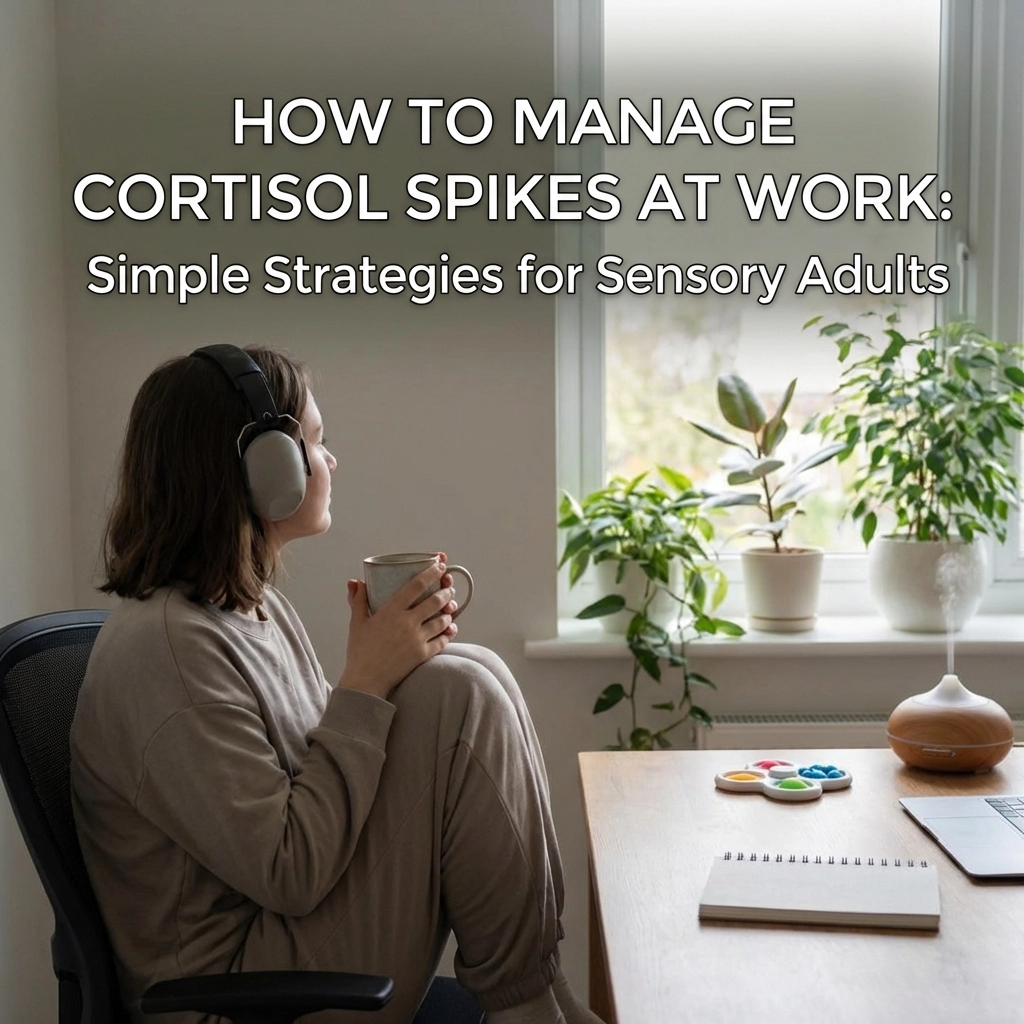
That familiar feeling hits you like a wave, your heart starts racing, your palms get sweaty, and suddenly the fluorescent lights feel ten times brighter. Your brain goes foggy, and you can't think straight. Sound familiar? You're experiencing a cortisol spike, and if you're a sensory adult navigating the workplace, you're definitely not alone.
For adults with sensory processing differences, autism, ADHD, or anxiety, the modern office can feel like a sensory minefield. But here's the good news: there are simple, practical strategies that can help you manage those overwhelming moments and even prevent them from happening in the first place.
What's Really Happening When Cortisol Spikes at Work
Cortisol is your body's built-in alarm system. When your brain perceives a threat, whether it's a surprise meeting, scratchy uniform fabric, or the office air conditioning that sounds like a jet engine, it floods your system with stress hormones. Your nervous system can't tell the difference between a real emergency and sensory overwhelm, so it reacts the same way.
For neurotypical people, these triggers might be mildly annoying. But when you have sensory sensitivities, they can feel genuinely overwhelming. The result? Racing thoughts, physical tension, difficulty concentrating, and that all-too-familiar feeling of wanting to escape.

Common Workplace Triggers for Sensory Adults
The office environment is packed with potential triggers that can send your nervous system into overdrive:
Sound triggers: Open office chatter, keyboard clicking, phone conversations, air conditioning hums, or that one coworker who always eats crunchy snacks during meetings.
Visual triggers: Harsh fluorescent lighting, flickering screens, cluttered spaces, or constant movement in your peripheral vision.
Tactile triggers: Scratchy uniforms, synthetic fabrics, uncomfortable chairs, or having to wear "professional" clothing that feels wrong on your skin.
Social triggers: Surprise meetings, interruptions when you're focused, having to make small talk, or being put on the spot in group settings.
Environmental triggers: Temperature changes, strong perfumes or cleaning chemicals, crowded elevators, or cramped workspaces.
Immediate Strategies for Cortisol Spikes
When you feel that familiar spike starting, you need tools that work fast and don't require explaining yourself to colleagues.
The 4-4-4-4 Breathing Reset
Box breathing is your secret weapon for activating your parasympathetic nervous system. Inhale for 4 counts, hold for 4, exhale for 4, hold empty for 4. Repeat this cycle 4-8 times. It sounds simple because it is, and it works in minutes, even during a meeting.
Strategic Micro-Breaks
Don't wait until you're completely overwhelmed. Take 10-15 minute breaks every 2 hours. Step away from your desk, walk to the bathroom, get water, or just step outside. These early interventions are much more effective than trying to recover after you're already in full overwhelm mode.
The 5-4-3-2-1 Grounding Technique
This technique works especially well for sensory-focused brains. Identify 5 things you can see, 4 you can touch, 3 you can hear, 2 you can smell, and 1 you can taste. It anchors you in the present moment and interrupts anxiety spirals by engaging your sensory awareness in a controlled way.

Sensory-Friendly Clothing and Stealth Tools
What you wear to work can be your first line of defense against cortisol spikes. The right clothing choices can provide comfort and regulation without looking "medical" or drawing unwanted attention.
Smart Fabric Choices
Look for natural fibers like cotton, bamboo, or merino wool that breathe and move with you. Avoid synthetics that can feel scratchy or trap heat. Seamless or flat-seam construction prevents irritating pressure points that can trigger sensory overload throughout the day.
Weighted Comfort That Looks Professional
A weighted scarf or cardigan can provide the deep pressure input your nervous system craves while looking completely professional. The gentle, consistent pressure helps regulate your autonomic nervous system and can prevent cortisol spikes before they start.
Stealth Stimming Solutions
Keep small, quiet fidget tools at your desk, stress balls, thinking putty, or textured pen grips. These tools help channel nervous energy and provide sensory input without disrupting meetings or drawing attention.
Real-World Success: Morgan's Story
Morgan, a tech analyst, used to dread team meetings. The combination of fluorescent lights, multiple conversations, and being put on the spot would send their stress levels through the roof. Here's what changed everything:
Morgan started wearing a soft, weighted cardigan to meetings, it looked professional but provided the deep pressure input they needed. They also practiced the 4-4-4-4 breathing technique before entering the conference room and kept a small stress ball in their pocket for subtle stimming during discussions.
The result? Morgan can now participate in meetings without the overwhelming anxiety that used to derail their entire afternoon. The key was having multiple small strategies working together rather than trying to tough it out.

Long-Term Cortisol Management Strategies
While immediate techniques are crucial, building long-term resilience helps prevent cortisol spikes from happening as frequently.
Sleep as Your Foundation
Prioritize 7-9 hours of quality sleep. Sleep deprivation amplifies stress perception and makes your nervous system more reactive to triggers. Create a consistent bedtime routine and optimize your sleep environment by blocking light and reducing noise.
Movement That Works for You
Regular exercise directly reduces stress hormones and releases feel-good endorphins. Find movement you actually enjoy, whether that's walking, swimming, dancing, or yoga. Aim for 30-50 minutes daily at an intensity where you can still have a conversation but couldn't sing.
Nutrition for Nervous System Support
Eat a balanced diet rich in whole grains, lean proteins, fruits, vegetables, and healthy fats. Limit sugary and processed foods that can cause energy crashes. Include fiber-rich foods like beans, nuts, and seeds to help keep cortisol levels stable throughout the day.
Building Your Support Network
Connect with colleagues who "get it" and maintain relationships outside work. Having people who understand your sensory needs creates a buffer against workplace stress. Don't underestimate the power of feeling understood and supported.
Setting Boundaries That Stick
Boundaries aren't selfish, they're essential for managing cortisol and staying productive.
Communication boundaries: Set realistic response time expectations for emails and use auto-responders during off-hours. Batch your email checks rather than constantly monitoring your inbox.
Task boundaries: Learn to say no to additional projects when you're at capacity. It's better to do fewer things well than to be overwhelmed and underperforming.
Environmental boundaries: Advocate for sensory-friendly accommodations like noise-canceling headphones, adjustable lighting, or a quieter workspace. Many accommodations are simple and inexpensive.
Your Personalized Action Plan
Ready to take control of your workplace stress? Start with our Adult Sensory Processing Disorder Checklist. This comprehensive guide helps you identify your specific triggers and create a personalized toolkit of strategies that work for your unique sensory profile.
The checklist covers everything from identifying sensory triggers to building effective coping strategies and communicating your needs at work. It's designed specifically for adults who want practical, professional solutions that don't require lengthy explanations or medical documentation.
[Download your free Adult SPD Checklist here] and start building your personalized stress management plan today.
Remember, managing cortisol spikes isn't about eliminating all stress: it's about giving yourself the tools to navigate challenging moments with confidence. Small changes in your clothing choices, breathing techniques, and workplace strategies can make a massive difference in how you feel throughout the day.
Start with one or two strategies that resonate with you, and build from there. Your nervous system: and your productivity: will thank you.
What's your go-to strategy for managing workplace stress? Share your best office hacks and calming routines in the comments below. Your experience might be exactly what another sensory adult needs to hear today.