
Let's be real for a second.
Parenting a sensory-challenged kid is a high-octane job. You're managing meltdowns, navigating clothing tags like they're tiny land mines, and constantly adjusting the environment to help your little one feel safe. It's exhausting. It's rewarding. And sometimes? It's completely overwhelming.
But here's something nobody talks about enough: sometimes that "stress" you're feeling isn't actually stress.
It's your own sensory system hitting a wall.
Wait… Adults Can Have Sensory Processing Issues?
Absolutely. Sensory Processing Disorder (SPD) isn't just a kid thing. Many adults live with sensory sensitivities their whole lives without ever having a name for it. Maybe you've always hated scratchy sweaters. Maybe crowded grocery stores make you want to crawl out of your skin. Maybe you've just chalked it up to being "sensitive" or "anxious."
Sound familiar?
Here's the thing: when you're raising a neurodivergent child, you become hyper-aware of sensory triggers, for them. But your own needs? Those tend to get shoved to the back burner.
The result? You end up running on empty, wondering why you feel so frayed even when nothing "big" happened.

The Static and The Drift: Two Sides of Sensory Overload
Before we get into the checklist, let's talk about two concepts that might help you understand what's happening in your nervous system.
The Static
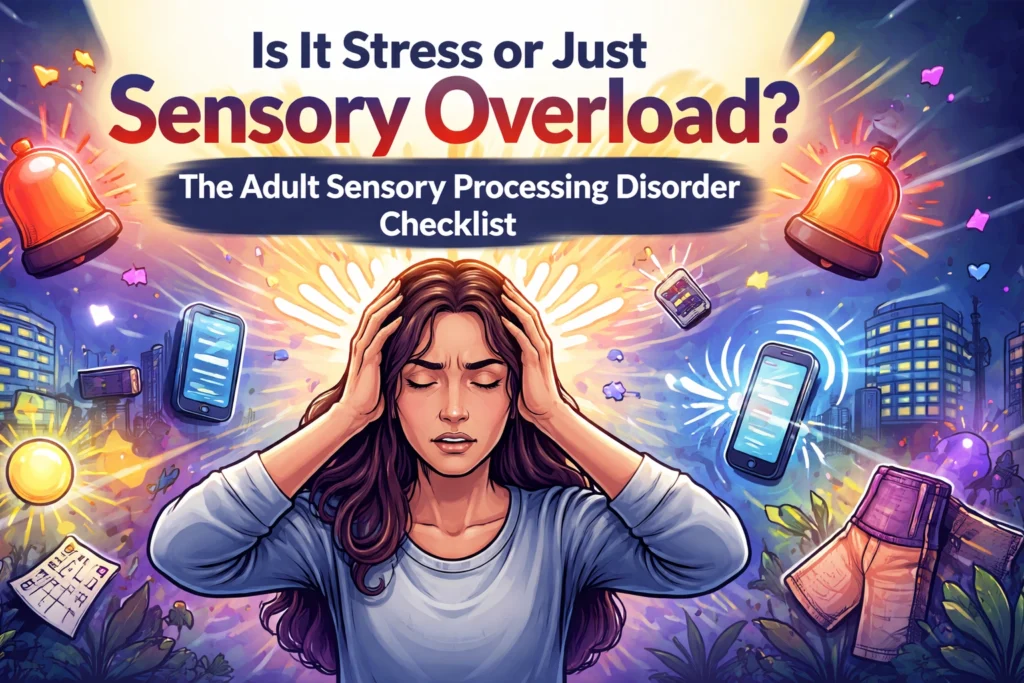
You know that feeling when everything is just… too much? The TV is on, your kid is asking questions, the dishwasher is humming, there's a weird smell from somewhere, and your shirt collar keeps brushing your neck in the most irritating way possible.
That's The Static.
It's sensory overload, when your brain receives more input than it can effectively process. Instead of filtering out the background noise (literally and figuratively), everything comes through at full volume. Your nervous system gets flooded, and you feel overwhelmed, snappy, or like you need to escape.
The Drift
On the flip side, there's The Drift.
This is that unmoored, anxious feeling when you're under-stimulated or disconnected from your body. You might feel spacey, restless, or like you're floating through the day without being fully present. It's harder to concentrate. Harder to feel grounded.
The Drift happens when your sensory system isn't getting enough of the right input to feel regulated.
Both The Static and The Drift can look like stress or anxiety on the surface. But the root cause, and more importantly, the solution, is different.
The Adult Sensory Processing Disorder Checklist
So how do you know if what you're experiencing is garden-variety parenting exhaustion or something more sensory-specific?
This informal checklist can help you start connecting the dots. It's not a diagnosis (only a healthcare professional can do that), but it's a starting point for self-awareness.
Touch (Tactile) Sensitivity
- Do certain clothing textures, seams, or tags drive you crazy?
- Do you avoid "messy" activities or cringe at unexpected touch?
- Do you either crave physical affection or avoid it?
- Is showering, brushing your hair, or other grooming sometimes overwhelming?
Sound (Auditory) Sensitivity
- Do everyday sounds (chewing, ticking clocks, background chatter) feel unbearable?
- Do you struggle to concentrate in noisy environments?
- Are you distracted by sounds that others don't even notice?

Light (Visual) Sensitivity
- Do bright lights, flickering screens, or busy visual environments bother you?
- Do you have difficulty with eye-hand coordination or feel overwhelmed in visually "cluttered" spaces?
Movement and Body Awareness (Proprioceptive & Vestibular)
- Are you clumsy or frequently bumping into things?
- Do you crave movement (pacing, bouncing, fidgeting) or actively avoid it?
- Do you have trouble sitting upright or maintaining good posture?
Internal Body Signals (Interoceptive)
- Do you have an unusual pain tolerance, either very high or very low?
- Do you struggle to recognize when you're hungry, thirsty, or need to use the bathroom?
- Do you have irregular appetite or trouble regulating your body temperature?
If you're nodding along to several of these, you're not alone. And more importantly, you're not broken.
Why This Matters for Parents
Here's where it gets really practical.
When you understand your own sensory profile, you become better at co-regulation with your child.
Co-regulation is the process of helping someone else calm their nervous system by being calm and regulated yourself. Kids don't learn to self-regulate in a vacuum, they learn it by being around regulated adults.
But if you're stuck in The Static or drifting through The Drift, you're running on fumes. Your nervous system is dysregulated, which makes it nearly impossible to be the calm anchor your child needs.
Understanding your triggers isn't selfish. It's essential.

Finding Your Anchor: Regulation Without the Medical Look
So what do you do with this information?
First, give yourself permission to take your own sensory needs seriously. Adjust the lighting. Step away from the noise. Wear clothes that actually feel good on your body.
Second, consider building a "sensory diet" for yourself, intentional sensory input throughout the day that helps you stay regulated. This might include:
- Deep pressure (weighted blankets, compression clothing)
- Movement breaks
- Fidget tools
- Quiet time in a dim room
- Textures that feel soothing against your skin
The challenge? Most products designed for sensory regulation look… well, medical. Clinical. Like you're wearing therapeutic gear.
And for a lot of adults, that's a non-starter. You want to feel grounded, not like a patient.
The Gentle Tether: Stealth Stimming for Adults
That's exactly why we created The Gentle Tether line at Anchor Apparel.
It's premium, functional loungewear designed for adults who need sensory support without broadcasting it to the world. Think buttery-soft fabrics, gentle compression, and weighted elements: all wrapped up in pieces that look like regular (really nice) clothes.
No tags. No scratchy seams. No clinical vibes.
Just quiet, luxurious regulation that helps you stay grounded through the chaos of daily life.
Because you deserve to feel anchored too. Not just your kids.

The Bottom Line
Parenting is hard. Parenting a sensory-challenged child while managing your own unrecognized sensory needs? That's a whole different level.
But here's the good news: awareness is the first step. Once you understand the difference between stress and sensory overload: once you can name The Static and The Drift: you can start building a life that actually supports your nervous system.
And when you're regulated, you're better equipped to help your child regulate too.
It's not about being perfect. It's about being anchored.
Ready to feel grounded without looking like you're wearing medical gear? Check out The Gentle Tether collection: sensory regulation that looks like luxury loungewear. Because self-care shouldn't come with a clinical label.