
Ever wonder why your child melts down in certain clothes but feels totally calm in others? Or why some fabrics make them squirm while others seem to instantly soothe? You're not imagining things, everyone has a unique "sensory style" that affects how they experience the world, including what they wear.
Finding your child's sensory style isn't about fixing anything. It's about understanding what makes them feel comfortable, confident, and ready to take on their day. And once you crack that code, those daily clothing battles can become a thing of the past.
What Exactly Is a Sensory Style?
Think of sensory style as your child's personal blueprint for how they process touch, movement, and pressure. Some kids crave that snug, weighted feeling of compression clothing. Others need loose, barely-there fabrics. Some can't handle tags or seams, while others don't even notice them.
Sensory style refers to how your child processes and responds to sensory input from their environment. Understanding this style helps you support your child's regulation, focus, and daily functioning: especially when it comes to comfortable clothing for autism and other sensory challenges.
There's no "right" or "wrong" sensory style. It's just how your child's nervous system is wired, and once you understand it, you can work with it instead of against it.
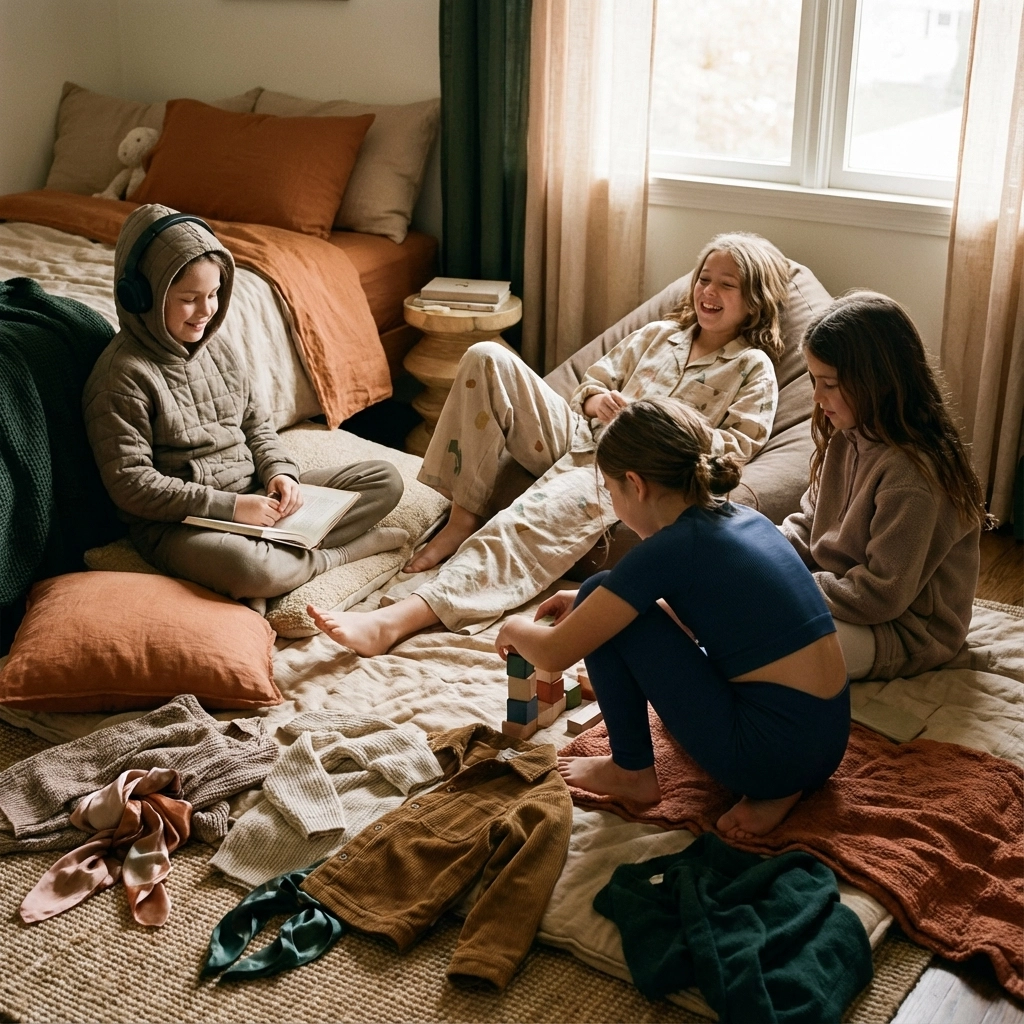
Why This Matters More Than You Think
When kids wear sensory friendly clothing that matches their style, amazing things happen. They focus better at school. They have fewer meltdowns. They feel more confident joining activities with friends. And you? You get to skip those morning battles where everything feels "wrong" or "scratchy" or "too tight."
But here's the thing: most parents are flying blind. They buy clothes based on what looks cute or what's on sale, then wonder why their child refuses to wear half their wardrobe. Once you understand whether your child needs weighted clothing for sensory processing, seamless options, or something else entirely, shopping becomes so much easier.
Step 1: Become a Sensory Detective
Start by observing your child in everyday situations over 2-4 weeks before drawing conclusions. Pay attention to their typical behavior across multiple settings: home, school, and community: rather than isolated incidents.
Ask yourself these key questions:
- Do they seem to crave movement or deep pressure?
- Do they avoid certain textures, sounds, or busy environments?
- Do they notice small noises or lights that others don't?
- Do they miss or respond slowly to sensory input?
For clothing specifically, notice:
- Which clothes do they reach for again and again?
- What triggers the biggest clothing battles?
- Do they prefer tight or loose fits?
- How do they react to different fabrics: cotton, fleece, athletic materials?
- Do tags and seams bother them, or do they not seem to notice?
The Four Sensory Processing Patterns
Most children fall into one of four main sensory processing patterns. Understanding these can help you identify what types of sensory clothing and stealth stimming clothes will work best.
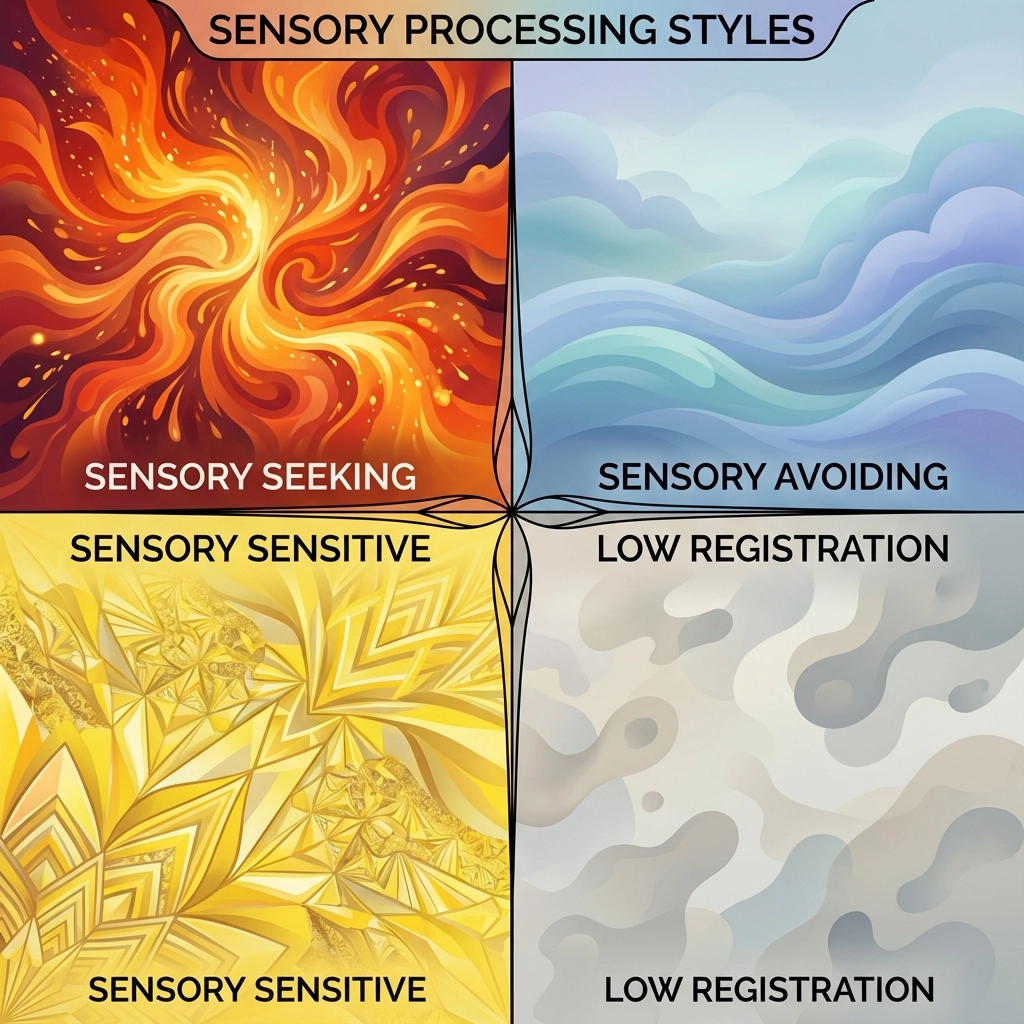
Sensory Seekers crave sensory input and are constantly moving, touching, or making noise. They may be fidgety, take sensory risks, and add extra input to everything they do. For clothing, they often love:
- Weighted hoodies and compression shirts
- Textured fabrics they can touch and feel
- Tight-fitting clothes that provide constant pressure
- Clothing with pockets they can fidget with
Sensory Avoiders become overwhelmed by too much input and try to escape or avoid it. They may refuse messy play, cover their ears, or limit exposure to certain environments. They typically prefer:
- Soft, smooth fabrics like bamboo or modal
- Tagless and seamless options
- Loose-fitting clothes that don't cling
- Minimal textures or embellishments
Sensory Sensitive children notice even small amounts of input and are easily distracted or upset by textures, lights, or sounds that others barely register. They often need:
- Super soft, gentle fabrics
- Flat seams or seamless construction
- Consistent textures (no scratchy labels or rough patches)
- Breathable materials that don't trap heat
Low Registration kids miss or take longer to respond to sensory input. They may appear low energy, inattentive, or unaware of their surroundings. They might benefit from:
- Weighted clothing that provides gentle pressure
- Compression garments to increase body awareness
- Textured or varied fabrics to provide more input
- Clothing that helps them feel more grounded
Many children show traits across more than one category depending on the situation, and that's totally normal.
Your Trial-and-Error Toolkit
Here's where the rubber meets the road. Finding your child's sensory style for clothing isn't a one-and-done deal: it's an ongoing process of trying, observing, and adjusting.
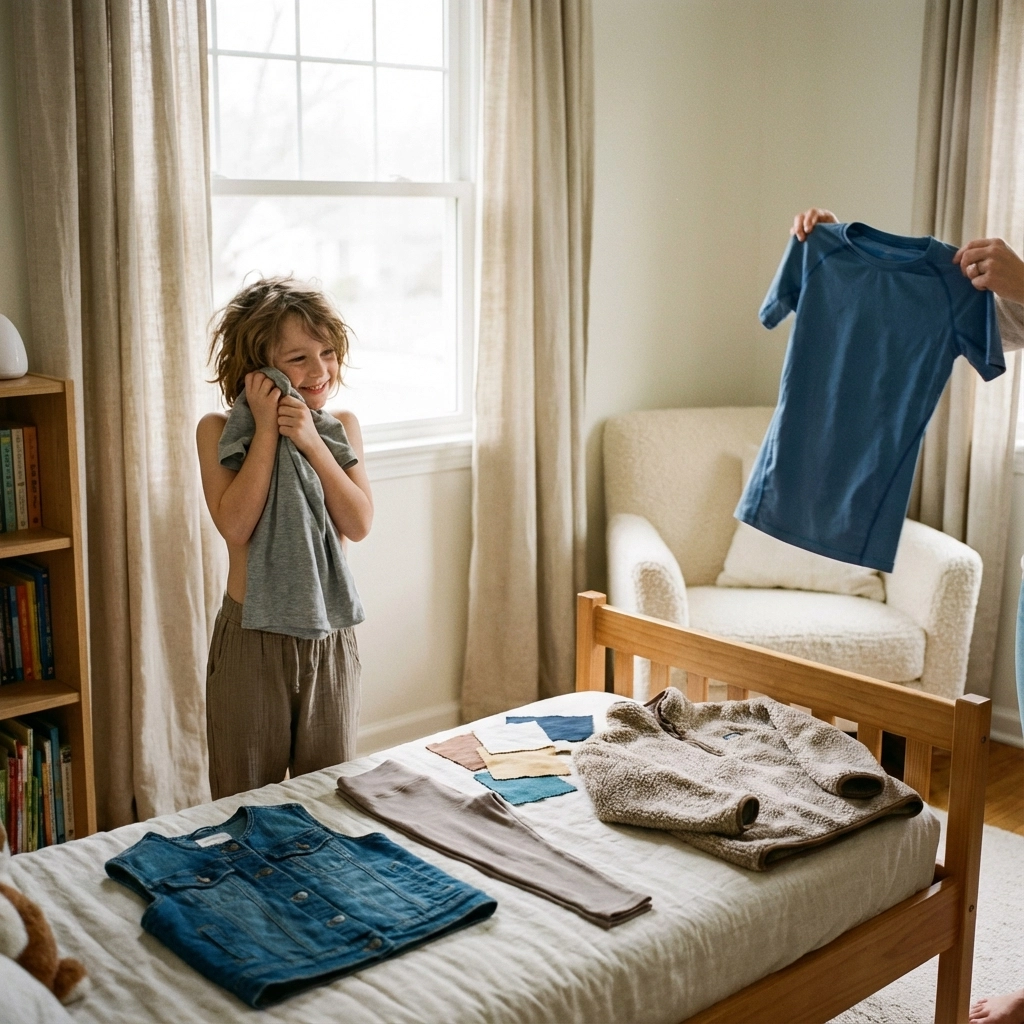
Start Small: Pick one or two pieces to experiment with rather than overhauling their entire wardrobe. Maybe try a weighted hoodie for anxiety or a seamless t-shirt to see how they respond.
Involve Your Child: Even young kids can tell you if something feels "good" or "yucky." Let them touch fabrics before you buy, and ask simple questions like "Does this feel soft or scratchy?" or "Do you like how this squeezes your arms?"
Create Simple Tracking: You don't need a complicated chart. Just jot down what they loved, what they hated, and any patterns you notice. Did they wear that compression shirt three days in a row? Note it. Did they refuse to put on those jeans again? Write that down too.
Try Different Times of Day: Some kids need different sensory input at different times. Maybe they need compression clothing for sensory challenges during busy school hours but prefer loose pajamas at bedtime.
Let Go of the "Shoulds"
This is the hardest part for many parents. You might think they "should" be able to wear jeans like other kids. Or they "should" be okay with that adorable sweater grandma bought.
Here's your permission to let all that go.
If your child thrives in athletic wear that looks like pajamas, lean into it. If they need the same three shirts in different colors, buy them. If compression clothing helps them feel regulated and confident, that's what matters: not whether it looks "normal" to other people.
The goal isn't to make your child fit into typical clothing expectations. It's to help them feel comfortable in their own skin so they can focus on learning, playing, and growing.
When Sensory Styles Change
Plot twist: sensory needs aren't static. Your child's sensory style might shift as they grow, during times of stress, or even with the seasons. The weighted blanket they loved last winter might feel too heavy now. The compression shirts that were perfect in third grade might not work in middle school.
This isn't a step backward: it's just part of how sensory systems develop and adapt. Stay flexible and keep observing. What worked yesterday might not work today, and that's okay.
Celebrate the Wins
When you find that perfect piece of clothing: the one your child reaches for every time it's clean, the one that helps them feel calm and confident: celebrate it! These "aha!" moments are worth their weight in gold.
Maybe it's discovering that your sensory seeker loves weighted joggers. Or realizing your sensory avoider thrives in bamboo fabric shirts. Or finding that perfect weighted clothing for sensory processing that helps during overwhelming days.
These wins matter because they represent more than just comfortable clothes. They represent your child feeling understood, supported, and accepted exactly as they are.

Building Your Sensory Style Wardrobe
Once you've identified your child's sensory style, you can start building a wardrobe that actually works. Look for:
- Quality over quantity: A few pieces they love beats a closet full of clothes they won't wear
- Multiples of favorites: When you find something that works, buy it in different colors
- Seasonal considerations: Sensory needs might change with weather and activities
- Growth room: Kids grow fast, but sensory preferences tend to be more consistent
Remember, there's no shame in having a "uniform" approach. If your child thrives in the same style of shirt and pants every day, that's not limiting: that's liberating.
Moving Forward
Finding your child's sensory style is a journey, not a destination. Some days will be easier than others. Some pieces will be hits, others will be misses. That's all part of the process.
The most important thing? You're tuning into your child's needs and helping them feel comfortable and confident. You're showing them that their sensory differences aren't problems to be solved: they're simply part of who they are.
What sensory style wins have you celebrated lately? We'd love to hear about your discoveries in the comments or share them with us on social media. And if you're looking for more sensory friendly clothing options that work with different sensory styles, check out our collection at Anchor Apparel: designed with comfort and confidence in mind.