
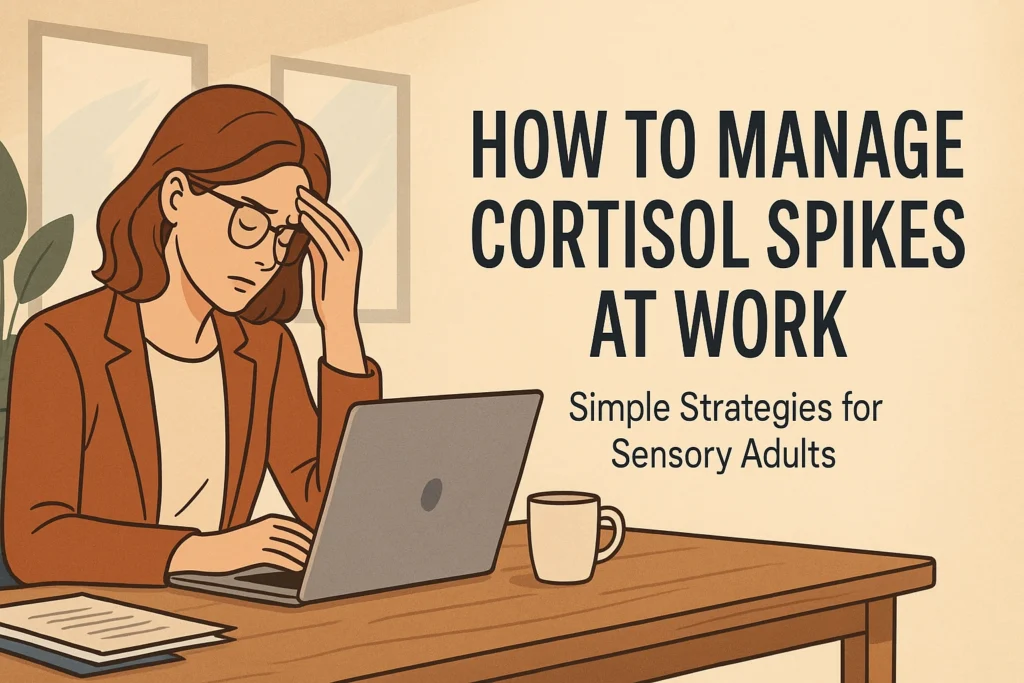
That sudden rush of panic when the office fluorescent lights start buzzing. The overwhelming feeling when your coworker decides to have a loud phone conversation right next to your desk. The way your heart races when someone switches up the meeting agenda at the last minute.
If you're a sensory adult, you know these moments all too well. And what you're experiencing isn't just stress: it's a cortisol spike, your body's natural alarm system going off because your nervous system is processing way more information than it can handle.
What Exactly Are Cortisol Spikes?
Cortisol is your body's main stress hormone. Think of it as your internal fire alarm: super helpful when there's actual danger, but exhausting when it keeps going off for things like unexpected schedule changes or scratchy work shirts.
For sensory adults (whether you have SPD, autism, ADHD, or just high sensitivity), your nervous system is already working overtime to process everyday sensations. This means your cortisol system gets triggered more easily and more often than neurotypical folks. It's not your fault: your brain is just wired to pick up on details others might miss.

The Usual Workplace Culprits
Let's be honest about what sets off those stress spikes at work:
Environmental chaos: Open offices with constant noise, flickering lights, strong perfumes from the person three desks over, or that one coworker who microwaves fish in the break room.
Surprise changes: Last-minute meeting changes, new software rollouts with zero training, or when your manager drops a "quick favor" on your desk at 4:30 PM.
Social overwhelm: Back-to-back meetings, forced team-building activities, or feeling like you need to mask your natural responses all day long.
Physical discomfort: Dress codes that require scratchy fabrics, uncomfortable chairs, or workspaces that are too hot, too cold, or too bright.
Information overload: Too many emails, constant Slack notifications, or trying to focus while surrounded by visual clutter.
Quick Relief When Cortisol Hits
When you feel that familiar spike coming on, here are some strategies that actually work:
The 4-4-4 Breath Reset
This isn't fancy meditation: it's practical nervous system regulation. Breathe in for 4 counts, hold for 4, breathe out for 4. Repeat until you feel your shoulders drop. You can do this at your desk, in a bathroom stall, or even during a video call with your camera off.
Micro-Breaks That Matter
Research shows that taking 10-15 minute breaks earlier in your workday is way more effective than waiting until you're completely fried. Set a timer for every 2 hours. Step away from your desk, walk to the water cooler, or just look out a window.
The 5-4-3-2-1 Grounding Trick
When your brain is spinning, anchor yourself in the present: Find 5 things you can see, 4 things you can touch, 3 things you can hear, 2 things you can smell, and 1 thing you can taste. It's like hitting the reset button on overwhelm.
Progressive Muscle Release
Tense your shoulders for 10 seconds, then release for 20 while thinking "relax." Work your way through different muscle groups. This helps your body physically let go of the stress response.

Sensory-Friendly Game Changers
Here's where the magic happens: making small changes that prevent cortisol spikes before they start:
Clothing That Actually Helps
Your outfit can either support or sabotage your nervous system. Consider:
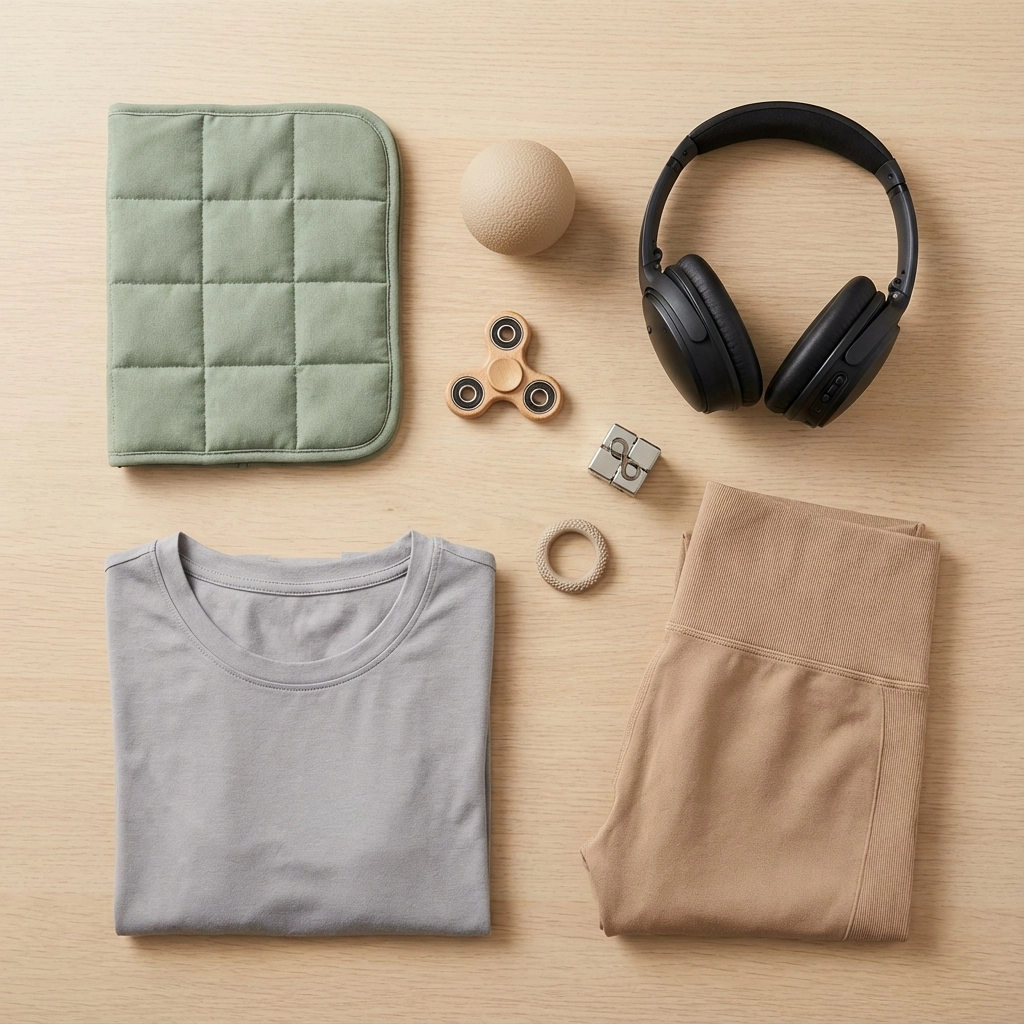
- Weighted hoodies or vests for that comforting pressure sensation
- Tagless, seamless shirts to avoid that constant scratchy distraction
- Compression socks for subtle proprioceptive input
- Soft, stretchy fabrics that move with you instead of against you
Environment Hacks
Small changes, big impact:
- Keep a pair of noise-canceling headphones at your desk
- Adjust your monitor brightness and use blue light filters
- Create a small "calm kit" with stress balls, fidget tools, or textured items
- Position your workspace to minimize visual distractions
Movement That Doesn't Look Weird
Sensory adults often need movement to regulate, but you can't exactly do jumping jacks in a meeting. Try:
- Foot exercises under your desk
- Discreet hand stretches
- Standing desk options or stability ball chairs
- Taking calls while walking (when possible)
Building Long-Term Resilience
Sleep and Recovery
Poor sleep amplifies everything. Aim for 7-9 hours, and if you're struggling, consider whether sensory factors are interfering: room temperature, noise, fabric textures, or light exposure.
Fuel Your Nervous System Right
Your brain needs steady blood sugar to handle stress well. Pack protein-rich snacks, stay hydrated, and consider reducing caffeine if you notice it makes you more reactive to sensory input.
Workplace Advocacy
This might feel scary, but advocating for your needs often benefits the whole team. Consider talking to your manager about:
- Flexible work arrangements or quiet workspace options
- Advance notice for schedule changes when possible
- Permission to use sensory tools (headphones, standing desk, etc.)
- Understanding around your need for processing time
For Managers and Coworkers
If you're reading this because you want to support a sensory colleague, here are simple ways to help:
- Give advance notice about changes when possible
- Respect boundaries around noise and scents
- Understand that "different" doesn't mean "wrong"
- Ask how you can support rather than assuming what they need
Creating a sensory-friendly workplace isn't just about accommodation: it's about recognizing that when people feel comfortable in their environment, everyone performs better.
The Bigger Picture
Managing cortisol spikes at work isn't about becoming a different person or hiding who you are. It's about giving your nervous system the support it needs to function well in environments that weren't necessarily designed with sensory differences in mind.
Remember, you're not broken or too sensitive. Your brain is processing information differently, and that comes with both challenges and strengths. The goal isn't to eliminate all stress: that's impossible. The goal is building a toolkit that helps you navigate workplace stress without burning out.
Your Next Steps
Start small. Pick one or two strategies that feel doable and try them for a week. Notice what helps and what doesn't. Your sensory needs are unique to you, so what works for someone else might not work for you: and that's completely normal.
Want to dive deeper? Check out our downloadable SPD adult workplace checklist to identify your specific triggers and supports. And if you're looking for a community of people who get it, consider joining our Skool community where we share practical tips and support each other through the daily challenges of being sensory in a non-sensory world.
What's your biggest workplace sensory challenge? Drop a comment below and share what's worked (or hasn't worked) for you. Your experience might be exactly what someone else needs to hear.
Managers and HR folks: How are you supporting sensory employees in your workplace? We'd love to hear about policies or accommodations that are making a real difference.
Together, we can create workplaces where everyone's nervous system gets the respect and support it deserves.
#SensoryAtWork #AdultSPD #StressManagement #AnchorApparel