
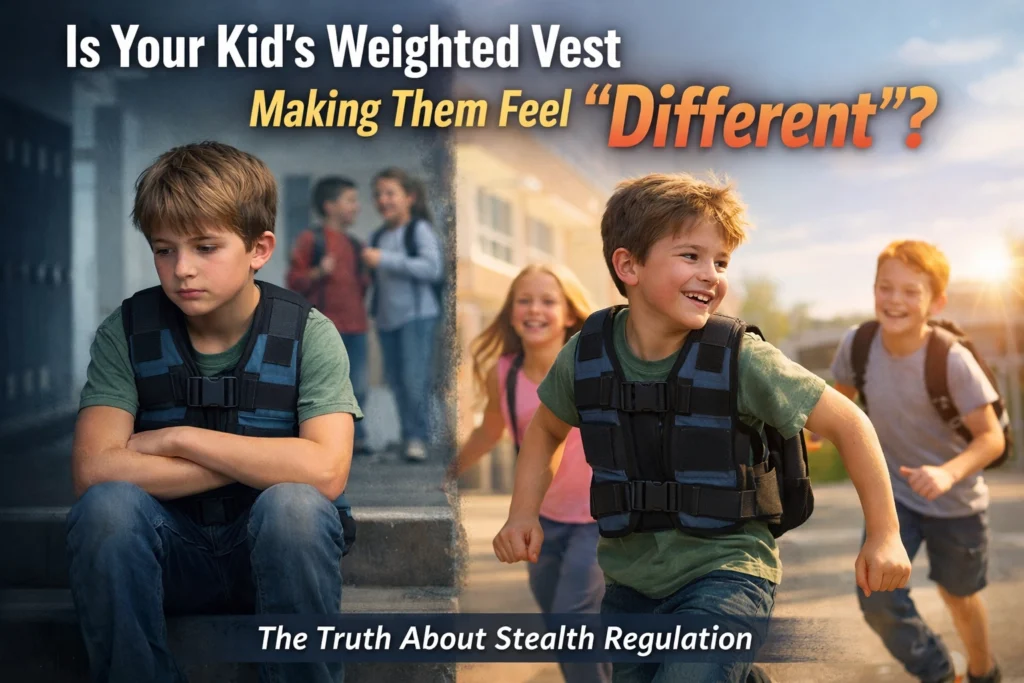
You've finally found something that helps. The weighted vest your occupational therapist recommended actually works, your child is calmer, more focused, less overwhelmed. That's the good news.
The bad news? Your kid refuses to wear it to school. Or they'll wear it at home but rip it off the second they see another kid. Or worse, they come home asking why they have to wear "the weird jacket" when nobody else does.
Sound familiar?
Here's the truth nobody talks about: traditional weighted vests work, but they come with a social cost that many parents and therapists don't fully consider.
The "Medical Look" Problem
Let's be honest about what most weighted vests look like. They look like life jackets. Or fishing vests. Or something your physical therapist would pull out of a supply closet.
They're bulky. They have visible straps and buckles. They come in "therapy colors", that specific shade of navy blue or maroon that screams "medical device." Some even have mesh pockets on the outside where you can see the weight inserts.
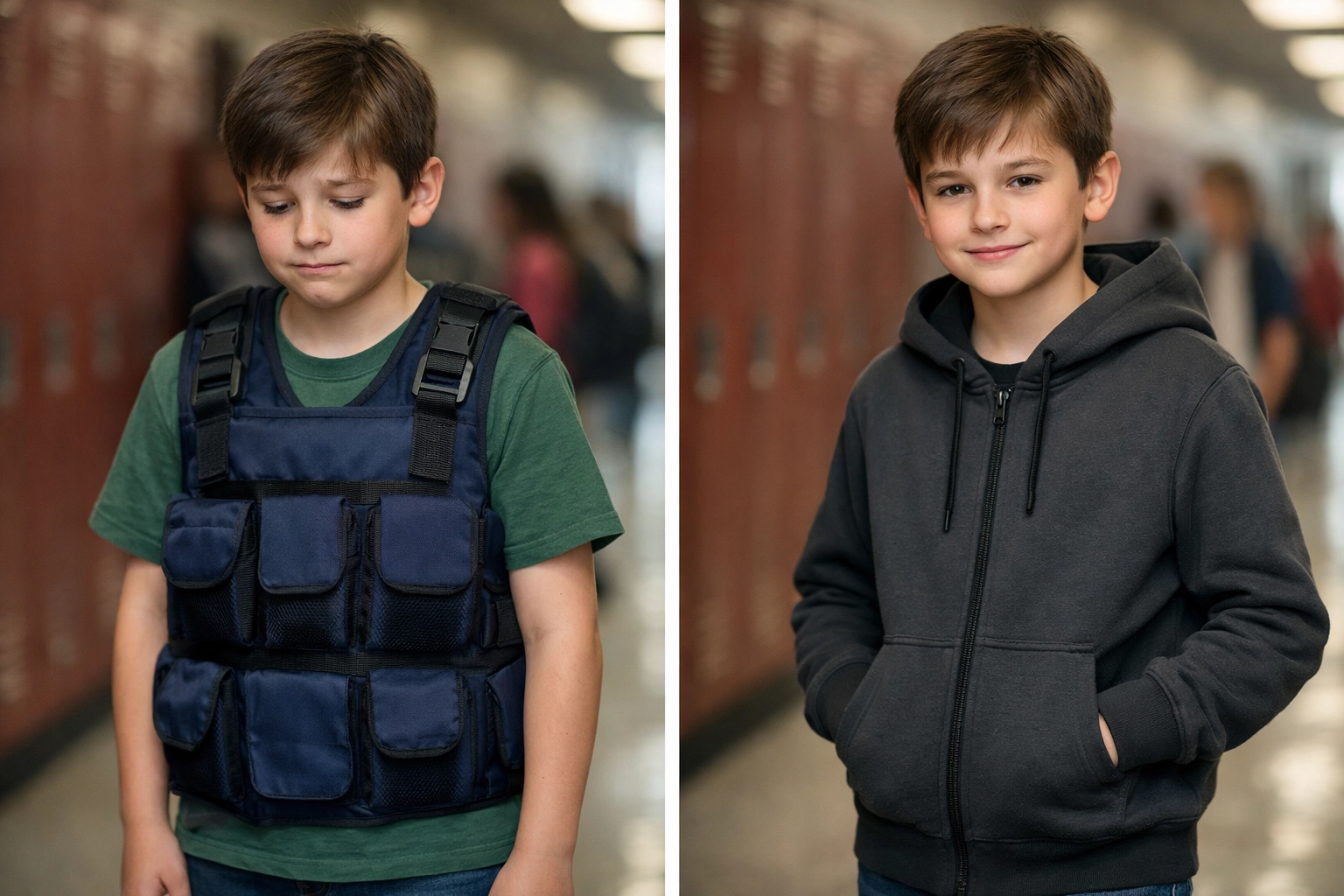
These aren't fashion choices. They're flags that mark your child as "different" to every peer, teacher, and stranger they encounter.
And here's what makes it harder: weighted clothing for sensory processing works best when worn consistently. But if your child is self-conscious about wearing it, they won't. You end up in this impossible situation where the tool that could help them regulate sits unused in their backpack.
The "Navigator's" Perspective
We call sensory-seeking kids "Navigators" because they're constantly trying to find their way through a world that feels overwhelming, unpredictable, and sometimes just too much.
These kids are incredibly perceptive. They notice everything, including how other kids look at them when they're wearing something that stands out.
By age 7 or 8, most kids start developing social awareness. They want to fit in. They're watching what their peers wear, how they act, what's "cool" and what's not. This is completely normal developmental stuff.
Now imagine you're a Navigator trying to manage sensory overload AND trying to fit in socially AND wearing something that makes you look different from everyone else. It's exhausting.
One parent told us her 10-year-old son called his weighted vest "the life jacket." Another said her daughter would wear it at home but hide it in her locker at school, defeating the entire purpose.
The vest wasn't the problem. The visibility was.
Enter "Stealth Stimming"
This is where things get interesting.
What if sensory regulation tools didn't look like therapy gear? What if they looked like… regular clothes? Better yet, what if they looked like the kind of high-end streetwear that teens and tweens actually want to wear?
That's the concept behind stealth stimming clothes.
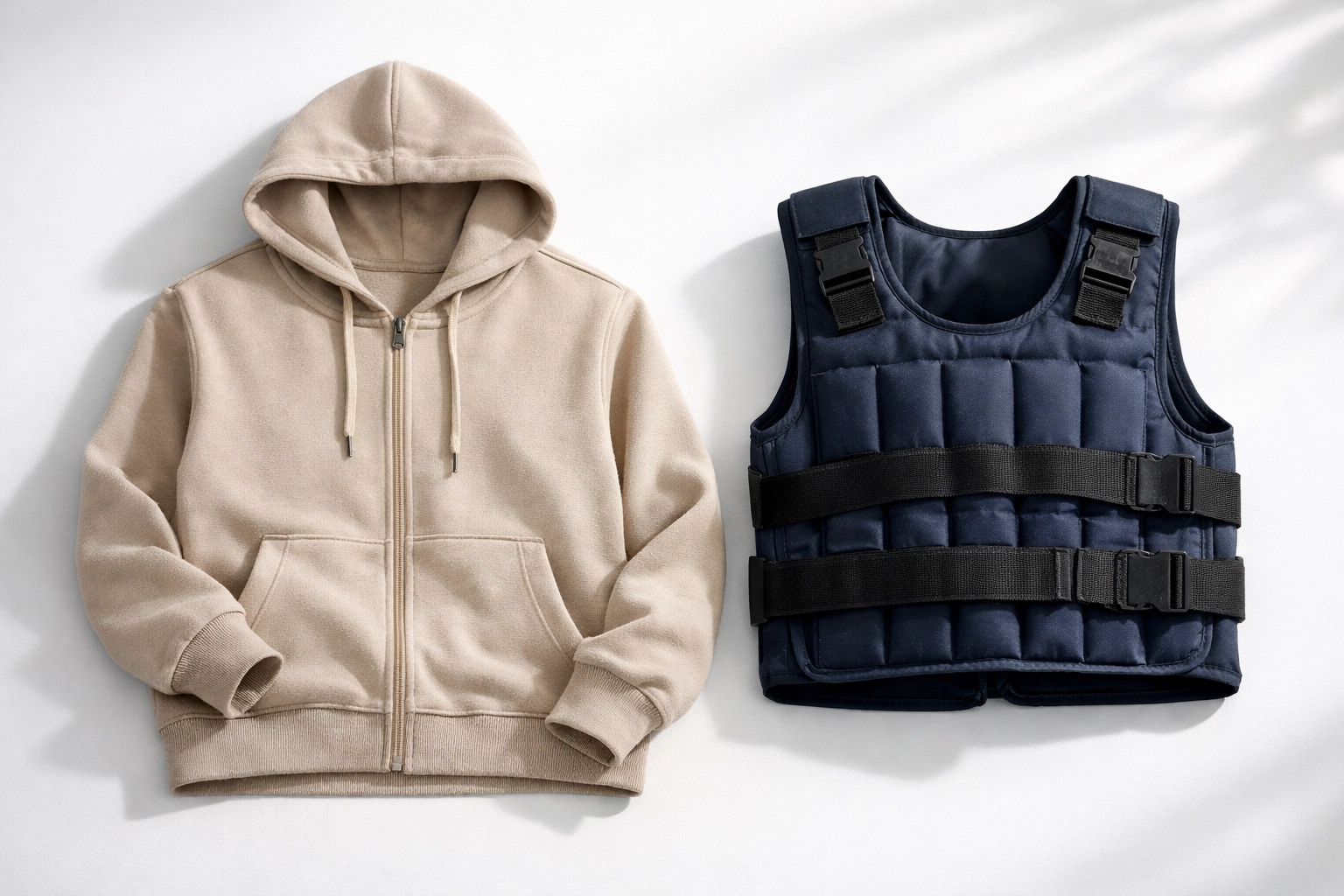
Think Essentials hoodies. Lululemon aesthetic. Clean lines, neutral colors, quality materials. Nothing that screams "medical device" or "therapy tool." Just really well-made clothes that happen to provide the proprioceptive input your Navigator needs.
The weighted clothing for sensory processing is there: it's just invisible to everyone else.
Your child gets the regulation. Their peers see a cool hoodie.
How "The Gentle Tether" Works
Traditional weighted vests use pockets with removable weights. The weight is concentrated in specific areas, and it's noticeable: both to wear and to look at.
Stealth regulation works differently. We call it "The Gentle Tether."
Instead of obvious weight pockets, the proprioceptive input comes from strategically distributed weight and compression throughout the garment. It's subtle. It's constant. And it addresses something really important: The Drift.
The Drift is what happens when a Navigator loses their sense of body awareness. They start moving too much, touching everything, seeking input because they literally can't feel where they are in space. It's not hyperactivity or bad behavior: it's their nervous system looking for information.

The Gentle Tether provides that steady, calming input that tells their body: "You're here. You're grounded. You're okay." It stops The Drift before it starts, without looking like a medical intervention.
And because it's built into clothing that looks normal, kids will actually wear it. Consistently. Which means it actually works.
The Problem Nobody Mentions: "The Static"
Here's another issue with traditional weighted vests: they go over regular clothes. And for many Navigators, regular clothes are already a problem.
We call it "The Static": that overwhelming sensory input from tags, seams, scratchy fabrics, and tight waistbands that makes getting dressed feel like torture.
You've probably lived this. The morning meltdowns. The outfit changes. The "I CAN'T WEAR THIS" battles that make everyone late. The Static isn't about being picky or difficult. It's real sensory pain.
So even if your child is willing to wear a weighted vest, they're wearing it over clothes that might already be causing sensory distress. You're adding regulation on top of irritation.
Non-medical weighted vests that replace regular clothing solve both problems at once. The garment itself is designed to eliminate The Static: seamless construction, tagless design, soft materials that don't trigger sensory issues. And it provides the proprioceptive input they need.
One solution. Two problems solved.
What Parents Are Saying
"My son wore his traditional weighted vest exactly twice. It sat in his closet for six months. Then we found weighted hoodies that looked like something from his favorite clothing brand. He wears it every day now: to school, at home, even on weekends. He doesn't see it as therapy gear. It's just his favorite hoodie."
"The difference is night and day. My daughter used to fight me about getting dressed every morning. Now she asks to wear her weighted hoodie. Her teacher said she's more focused in class, and I didn't even tell the teacher it was sensory clothing. It just looks like a normal hoodie."
The Real Question
The real question isn't whether weighted vests work. They do. Research shows that weighted clothing for sensory processing can help with attention, anxiety, and regulation.
The real question is: Will your child actually wear it?
If the answer is no: or if it's "only at home" or "only when no one else is around": then it doesn't matter how effective the therapy tool is. An unused vest helps no one.
Stealth stimming clothes change the equation. They give Navigators the sensory regulation tools they need without the social cost. They look like something a teenager would choose at a store, not something prescribed by a therapist.

And that makes all the difference.
Finding What Works
Every Navigator is different. Some kids might genuinely not care about how their weighted vest looks. Others might be hyperaware of it from day one.
The key is giving yourself: and your child: options. Sensory regulation tools shouldn't add stress to their lives. They should reduce it.
If your child is refusing to wear their weighted vest, or if you're noticing they're self-conscious about it, it's not a failure. It's information. It's telling you that the tool might work for their nervous system, but it's not working for their social-emotional needs.
And both matter.
Stealth regulation isn't about hiding or being ashamed of sensory needs. It's about giving kids the dignity of managing those needs in a way that feels comfortable and safe for them. It's about meeting them where they are: sensory needs AND social needs: without asking them to choose between the two.
Because here's the thing: regulation shouldn't come at the cost of belonging.
Your Navigator deserves to feel grounded AND to feel like they fit in. With the right sensory friendly clothing, they can have both.