

You've seen it a hundred times. Your kid walks through the door at 3:15 PM, drops their backpack, and within minutes: sometimes seconds: the meltdown begins. The tears. The yelling. The complete collapse into a puddle of emotions over something that seems… small.
Maybe it's the wrong snack. Maybe their sibling looked at them wrong. Maybe it's absolutely nothing you can identify.
And you're left wondering: What happened? They were fine at school.
Here's the thing: they weren't fine. They were holding it together. And what you're witnessing isn't bad behavior: it's a sensory hangover.
What Is a Sensory Hangover?
Think about the last time you spent an entire day in a loud, crowded environment: maybe a conference, a busy airport, or a packed mall during the holidays. Remember that bone-deep exhaustion that hit you afterward? That foggy, depleted feeling where even small decisions felt impossible?
That's basically what your child experiences after a full day of school, except it's happening to a still-developing nervous system with far fewer coping tools.
A sensory hangover is the cumulative exhaustion that hits after hours of managing sensory input and masking discomfort. Scientists call it "after-school restraint collapse" or the "letdown effect": and it's not misbehavior. It's a nervous system response to accumulated stress.
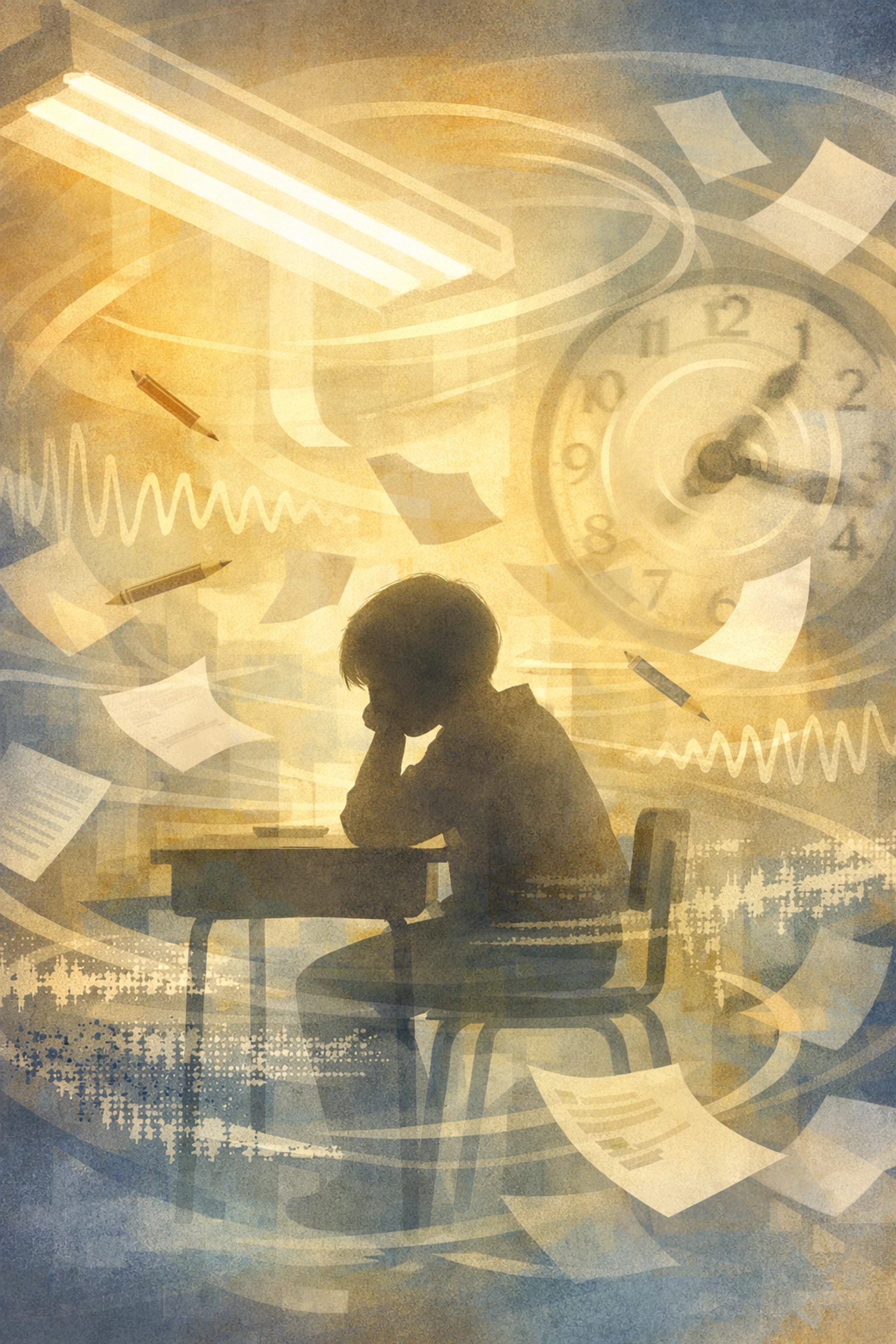
Throughout the school day, your child's brain is processing an absolute tsunami of sensory information. Fluorescent lights humming overhead. Twenty-five kids talking, chairs scraping, pencils scratching. Fire drills. Cafeteria chaos. Bells ringing. Transitions every 45 minutes. And somewhere in all of that, they're supposed to sit still, focus, follow directions, and regulate their emotions.
For neurodivergent kids: especially those with sensory processing disorder, ADHD, or autism: this isn't just tiring. It's like running a marathon while juggling. Every. Single. Day.
They're managing what we call "The Static": that constant background noise of sensory overload that makes everything harder. And they're doing it while trying to appear "fine" because that's what's expected in a classroom setting.
The 3 PM Wall: Why It Happens at Home
Here's the beautiful, heartbreaking truth: your child melts down at home because home is safe.
All day, they've been using every ounce of self-regulation they have. They've suppressed stims. They've held back tears during overwhelming moments. They've powered through sensory discomfort that would make most adults need a dark room and silence.
Their nervous system has been in "survival mode": stress hormones building up, their amygdala working overtime to keep them regulated enough to function in an environment that wasn't designed for their sensory needs.
Then they walk through your front door.
And their nervous system finally exhales. It recognizes safety. It knows it can finally stop holding everything together. So it releases all that pent-up tension: sometimes like a slowly deflating balloon, sometimes like an exploding volcano.
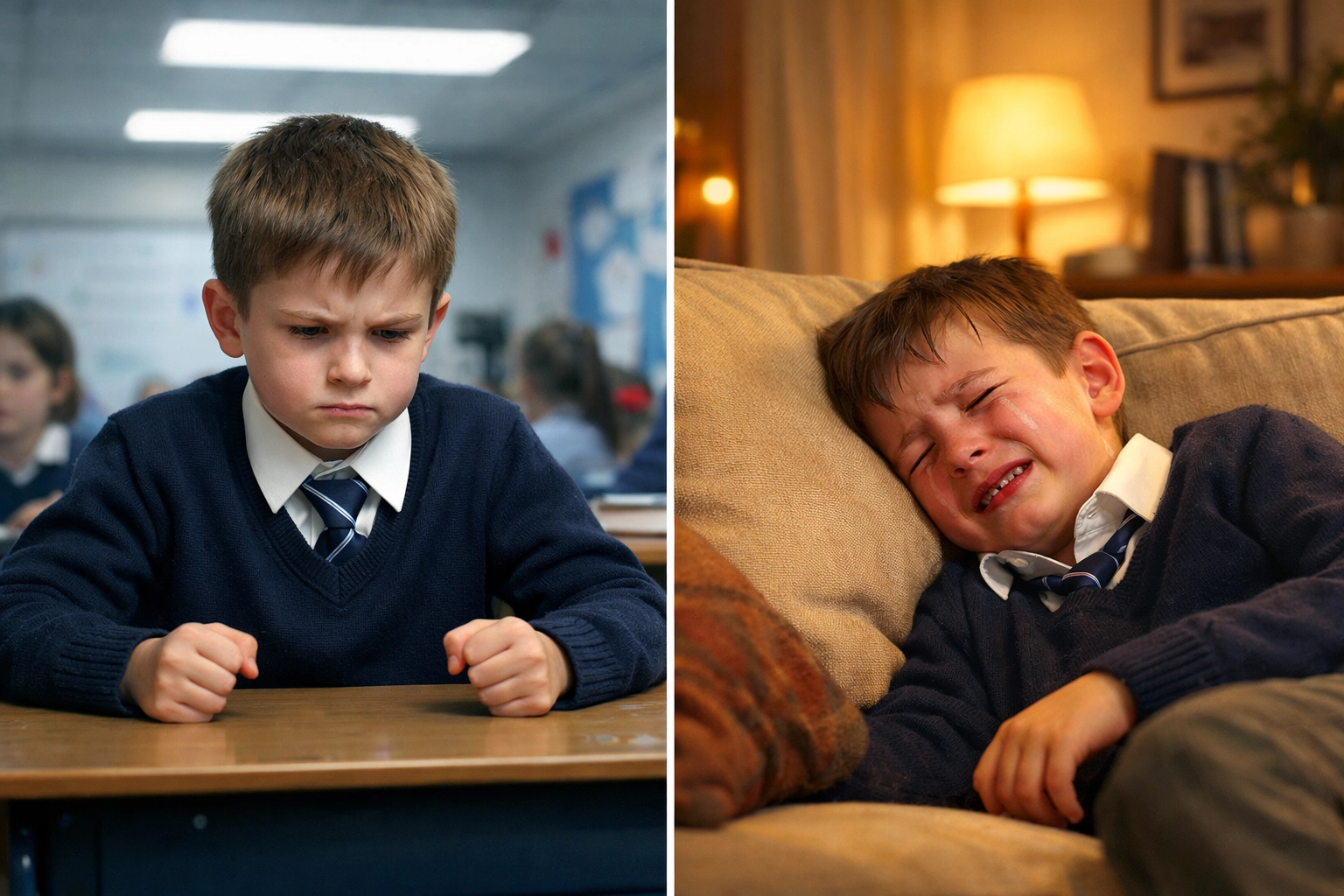
This isn't manipulation. It's not disrespect. It's actually a sign that you've created a safe space where your child can finally let their guard down. The meltdown is their nervous system saying: "I've been holding this all day, and I can't anymore."
Children with heightened sensory sensitivity or differences in emotional regulation experience this even more intensely. They're working twice as hard to manage inputs that barely register for neurotypical kids, which means they hit empty faster and harder.
Proactive Regulation: The Power of Deep Pressure Throughout the Day
Here's where things get hopeful. What if instead of just managing the aftermath of the sensory hangover, we could reduce its intensity in the first place?
That's where deep pressure therapy comes in: and why Anchor Apparel exists.
Deep pressure therapy provides proprioceptive input (fancy words for "information about where your body is in space") that helps regulate the nervous system. It's the same reason weighted blankets work, why tight hugs feel calming, or why many kids naturally seek out pressure by wedging themselves into tight spaces.
The magic happens when that deep pressure is available during the day: while your child is accumulating stress: not just after the meltdown has already started.
Think of it like this: if a sensory hangover is like a bucket slowly filling with water all day until it overflows at 3 PM, deep pressure therapy is like having a small drain in the bottom of the bucket. The water still comes in, but it's draining out continuously, so you never hit that catastrophic overflow point.
When kids wear deep-pressure apparel to school, they're getting constant, gentle proprioceptive input that helps their nervous system stay more regulated throughout the day. They're not eliminating the stress: school is still school: but they're managing it incrementally instead of accumulating it until they explode.
The Gentle Tether: Staying Grounded All Day

We call this concept "The Gentle Tether."
Imagine your child's nervous system is like a balloon. Throughout the day, all that sensory input and emotional regulation is like helium being pumped in, making the balloon float higher and higher into overwhelm. By 3 PM, they're so far up that the crash back down to earth is brutal.
Deep pressure apparel acts like a gentle tether: a soft string keeping the balloon closer to the ground all day. Your child still experiences the stress, but they're not floating so far into dysregulation that the descent becomes a crash.
This is what we mean by "stealth stimming." Our compression shirts, hoodies, and leggings provide continuous deep pressure input that kids can access discreetly throughout the school day. No one knows they're wearing sensory support: it just looks like regular clothes. But underneath, that gentle squeeze is working quietly to keep their nervous system more grounded.
The proprioceptive input helps them:
- Feel more aware of their body in space (reducing clumsiness and spatial anxiety)
- Stay calmer during transitions and overwhelming moments
- Access a self-regulation tool without drawing attention
- Build up less cumulative stress by the end of the day
It's not a magic cure. Your child might still have hard days. But many parents report that after-school meltdowns become less frequent, less intense, or shorter when their kids wear deep-pressure clothing to school.
Creating a Sensory-Friendly "Re-Entry" Routine
Even with proactive support, your child will still need help transitioning from school mode to home mode. Here are some practical tips for creating a gentle re-entry routine:
1. Build in Quiet Time
The first 20-30 minutes after school shouldn't involve questions, demands, or stimulation. Create a "decompression zone" where your child can just be. Maybe they retreat to their room, maybe they crash on the couch: let them decompress before expecting conversation or homework.
2. Offer Sensory Input Options
Have calming sensory tools readily available: a weighted blanket, a swing, headphones with calming music, a chewy snack (chewing is regulating!), or even just permission to run around outside. Let them choose what their nervous system needs.
3. Keep Expectations Low
This isn't the time for homework battles or chore lists. The after-school window is for regulation first, productivity later.
4. Provide Predictability
Knowing what to expect reduces stress. Create a consistent after-school routine so their nervous system can relax into familiarity instead of bracing for the unknown.
5. Lead with Connection
Sometimes the best regulation tool is your calm presence. A hug (if they're receptive), sitting nearby without talking, or just acknowledging "today was a lot" can help more than any strategy.
The Bottom Line
After-school meltdowns aren't a reflection of your parenting or your child's character. They're a nervous system response to a world that isn't built for sensory-sensitive kids.
Understanding that your child is experiencing a genuine sensory hangover: not "just being difficult": changes everything. It shifts you from frustration to compassion. From punishment to support. From battling the behavior to addressing the root cause.
And when you combine that understanding with proactive tools like deep pressure therapy through stealth stimming apparel, you're not just managing meltdowns: you're helping your child build a more regulated nervous system that can handle the sensory demands of their day.
Your child is doing their absolute best. And now you have language for what they're experiencing, plus practical tools to help lighten the load.
Because every kid deserves to get through the school day without needing to fall apart just to feel okay again.