
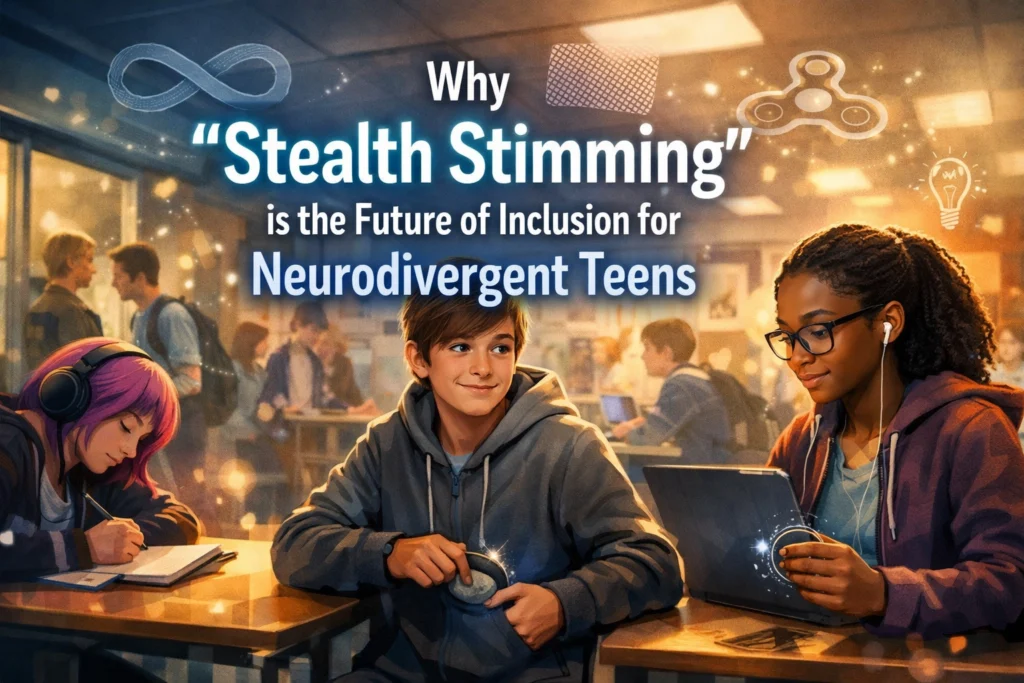
Your kid just wants to blend in.
That's not a character flaw. That's not them "hiding who they are." That's them being a teenager. And for neurodivergent teens who need sensory regulation tools to get through the school day, the equipment designed to help them often does the exact opposite, it singles them out.
Weighted vests that look like medical gear. Fidget spinners that announce "I'm different" to everyone within earshot. Compression clothing that screams "therapy tool" instead of "style choice."
The future of inclusion isn't about making neurodivergent teens more visible. It's about giving them the tools to regulate without the social cost. That's where stealth stimming comes in.
The Social Pressure Is Real (And It's Not Going Away)
Middle school and high school are brutal. We all remember it. Now imagine navigating that environment when you're also dealing with sensory overload, anxiety, or ADHD.
The Static hits hardest during these years. Fluorescent lights, crowded hallways, surprise fire drills, the cafeteria at lunch: it all adds up. And when a teen starts to feel The Drift (that disconnected, overwhelmed feeling), they need regulation. Fast.
But here's the problem: traditional sensory regulation tools stand out. A weighted vest under a school uniform looks bulky. A fidget toy gets confiscated or becomes a distraction for other students. Visible stimming behaviors: hand flapping, rocking, vocal stims: can lead to stares, comments, or worse.
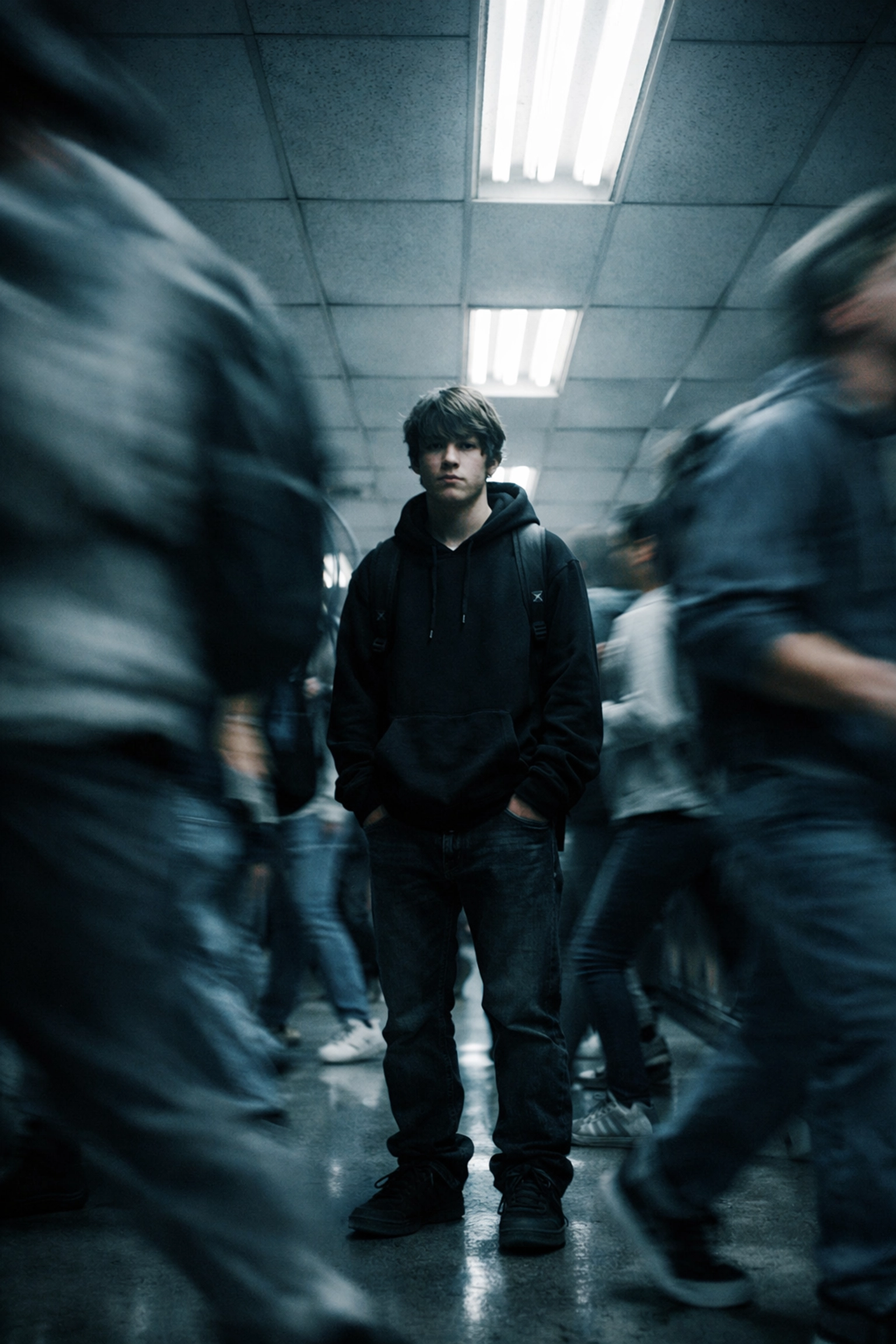
Most neurodivergent teens learn early on to mask their needs. They suppress their stims. They white-knuckle their way through The Static. They push down the discomfort until they get home, where they finally melt down in private.
That's not inclusion. That's survival mode.
What Is Stealth Stimming?
Stealth stimming is sensory regulation that happens discreetly. It's the subtle behaviors and tools that provide proprioceptive input, compression, or tactile feedback without drawing attention.
Think about it: neurotypical people stim all the time. They tap their feet under the table. They twist their hair during a test. They bounce their leg in a waiting room. Nobody blinks twice.
Stealth stimming for neurodivergent teens works the same way: it's regulation that flies under the radar. Some examples include:
- Mental repetition of phrases or songs
- Finger tapping or subtle hand movements
- Chewing gum or the inside of your cheek
- Hair twirling
- Wearing weighted or compression clothing
That last one is where the game changes. Because unlike behaviors that can still be noticed or policed by teachers, sensory clothing does its job 24/7 without anyone knowing it's there.
Why Medical-Looking Gear Doesn't Cut It Anymore
Here's the thing about traditional sensory regulation tools: they were designed by occupational therapists, not fashion designers. And that's fine for young kids or clinical settings. But for a 14-year-old trying to sit with their friends at lunch? It's a dealbreaker.
A weighted vest with visible Velcro straps and quilted panels looks exactly like what it is: medical equipment. Even if it helps with sensory processing, the social cost is too high. Teens won't wear it. Or worse, they'll wear it and hate themselves for needing it.
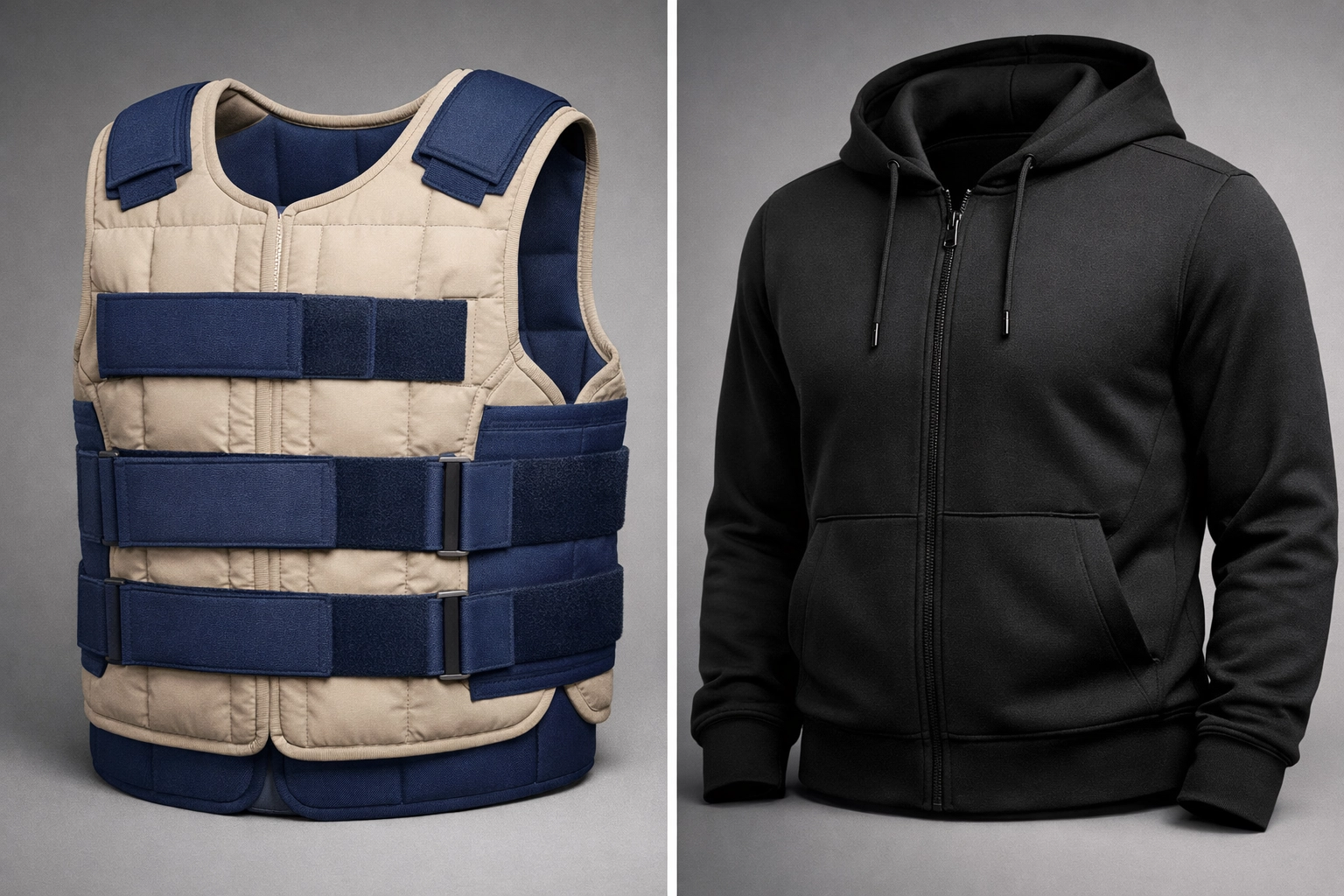
The same goes for compression shirts that look like athletic gear from 2005, or hoodies with stiff weights sewn into obvious pockets. These designs weren't built with The Navigator in mind: the neurodivergent teen who's trying to move through their world with confidence and autonomy.
If we want actual inclusion, we need to design sensory regulation tools that teens want to wear. Not because they have to. Because they look good.
Inclusion Through Design: The Anchor Philosophy
At Anchor, we don't make "special needs clothing." We make premium loungewear that happens to provide sensory support.
Our weighted hoodies look like something you'd see at Fear of God or Lululemon. Clean lines. Minimalist design. High-quality fabrics that feel good against the skin. No tags, no rough seams, no obvious "therapy tool" aesthetic.
The weights are evenly distributed and completely hidden. The compression is built into the cut and fabric blend, not announced with tight elastic bands. The result? A hoodie that provides proprioceptive input and gentle pressure: what we call The Gentle Tether: without looking like anything other than a really nice hoodie.
That's stealth stimming in action.
When a teen wears comfortable clothing for autism or ADHD that doesn't look like comfortable clothing for autism or ADHD, something shifts. They're not marked by their tools. They're supported by them. There's a huge difference.
The Gentle Tether: Constant, Invisible Regulation
The Gentle Tether is our term for the feeling our weighted and compression apparel provides. It's that subtle, grounding pressure that keeps you connected to your body throughout the day.
For neurodivergent teens dealing with The Static: sensory overload from a chaotic school environment: The Gentle Tether acts like an anchor. It doesn't eliminate the noise, but it keeps you from floating away into overwhelm.

Unlike a fidget tool that you have to remember to use, or a breathing technique that requires stepping out of class, a weighted hoodie for anxiety works passively. You put it on in the morning, and it does its job all day long. No one needs to know. No one needs to ask questions.
This is what makes stealth stimming so powerful. The regulation happens in the background while the teen focuses on being a teen: hanging with friends, participating in class, navigating their social world.
Confidence for The Navigator
When a teen feels regulated and looks good, their confidence changes.
They're not worried about someone noticing their "special vest." They're not anxious about being called out for stimming. They're not carrying the weight of feeling different on top of everything else.
Instead, they're wearing a hoodie they genuinely like. One that makes them feel grounded and comfortable. One that their friends might even compliment.
That shift matters. Because neurodivergent fashion shouldn't be a separate category. It should just be fashion: with the added benefit of sensory support built in.
The Navigator deserves tools that empower them, not tools that label them. Stealth stimming through high-quality sensory clothing gives them exactly that.
Peace for The Guardian
And for parents? Knowing your child has support throughout the school day: without the social stigma: changes everything.
You're not sending them out into The Static unprotected. But you're also not forcing them to wear something that makes them a target. It's the balance you've been searching for.
Our weighted hoodies and compression apparel give The Guardian peace of mind. Your teen is getting the proprioceptive input they need. They're benefiting from sensory regulation tools that actually work. And they're doing it on their terms, in clothing they choose to wear.
That's the future of inclusion.
The Bigger Picture
Stealth stimming isn't about hiding who you are. It's about having options.
Some neurodivergent people are loud and proud about their stims. They wear their differences openly, and that's beautiful. But for the teens who just want to move through their day without extra attention: who want regulation without explanation: stealth stimming is a lifeline.
The future of inclusion means meeting people where they are. It means designing sensory regulation tools that don't force a choice between comfort and fitting in. It means treating neurodivergent teens like the style-conscious, socially aware individuals they are.
At Anchor, that's what we're building. Premium apparel that provides The Gentle Tether. Clothing that looks like streetwear but functions like a sensory regulation tool. Gear that supports The Navigator without marking them.
Because every teen deserves to feel grounded, confident, and like they belong.
Even when The Static gets loud.