
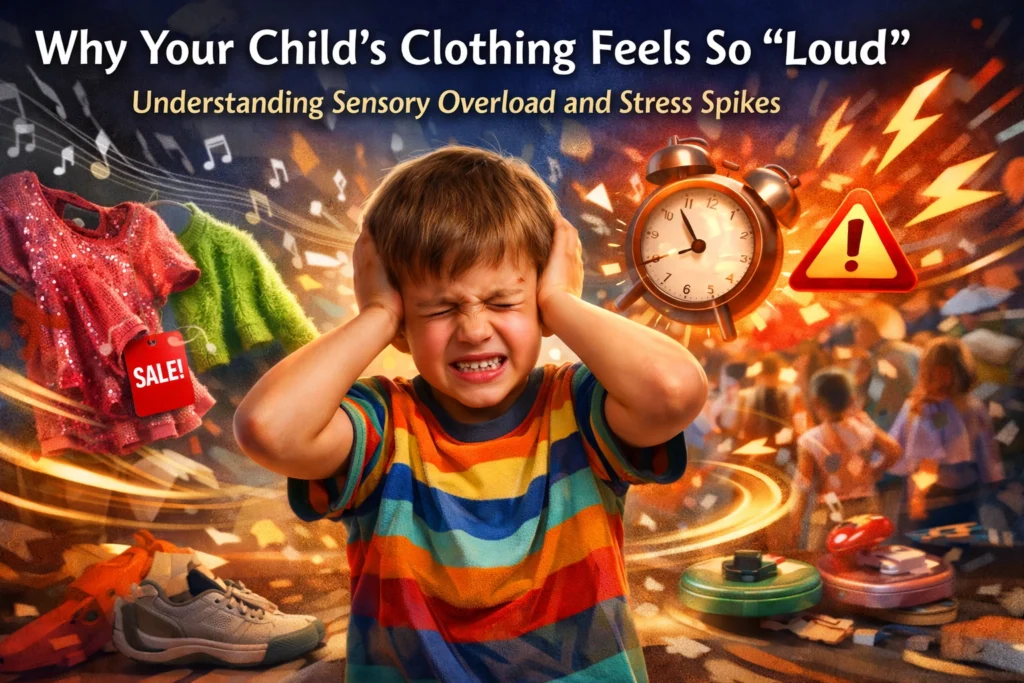
If you’ve ever watched your child have a complete meltdown over a pair of socks or a "scratchy" t-shirt that looks perfectly fine to you, you aren't alone. For many parents, the morning routine feels less like getting dressed and more like navigating a minefield. You pick out a soft shirt, and they scream that it "hurts." You find seamless socks, but the texture is "too weird."
To the outside world, it looks like a tantrum. But inside your child’s body, something much more intense is happening. At Anchor Apparel, we like to call this phenomenon "The Static." For your child: whom we call The Navigator: clothing isn’t just fabric. Sometimes, it’s a source of sensory overload that is so loud, it’s all they can hear.
In this post, we’re going to dive into why clothes can feel "loud," how this creates real physical stress responses like cortisol spikes, and how we can use things like proprioceptive input and weighted clothing to bring back the quiet.
What is "The Static"?
Imagine you are trying to have a conversation while someone is standing next to you blowing a whistle, a strobe light is flashing in your eyes, and your shoes are filled with tiny pebbles. You probably wouldn't be very polite, and you certainly wouldn't be able to focus on learning your math facts or sharing your toys.
This is what sensory overload feels like.
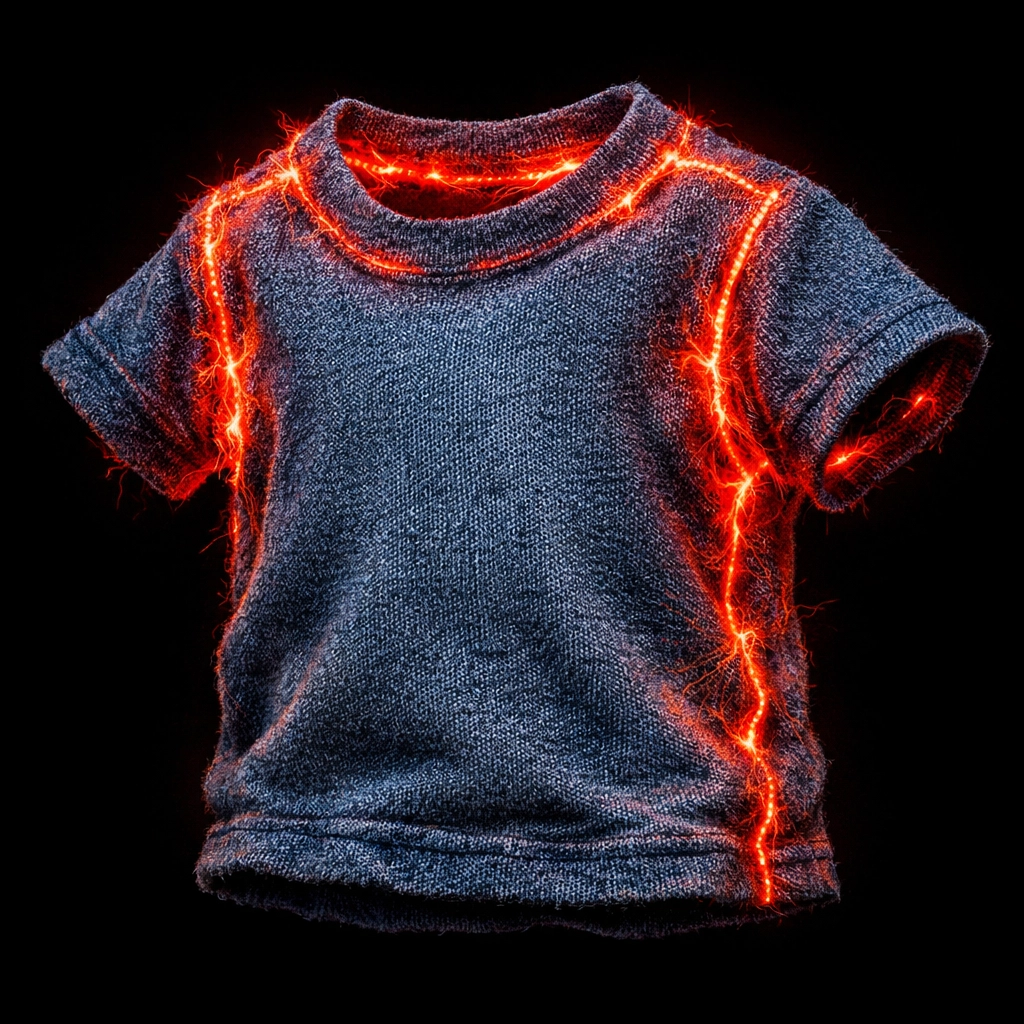
For kids with sensory processing sensitivities, their brains have a hard time filtering out the "extra" information coming from their environment. While most of us can ignore the feeling of a waistband or the light touch of a shirt tag, a sensory-sensitive child’s brain treats that input as a high-priority alert. This constant barrage of tactile information creates "The Static": a background noise of discomfort that never turns off.

The Navigator and the "Loud" Shirt
We call the child "The Navigator" because every single day, they are trying to steer their way through a world that wasn't necessarily built for their specific sensory needs.
When a Navigator says their clothes are "loud," they aren't being dramatic. They are describing a neurological reality. For them, a stiff denim seam feels like a serrated blade. A polyester blend feels like a swarm of ants. When these sensations become too much, the brain goes into "protection mode."
When the brain decides it’s under attack by its own clothes, it triggers the "fight or flight" response. This is where things get physical.
The Science of the Stress Spike
Sensory overload isn’t just "all in their head." It’s a full-body experience. When a child experiences persistent tactile irritation, their endocrine system gets involved. The brain signals the adrenal glands to release cortisol, the body’s primary stress hormone.
Think of cortisol as the alarm system. It’s great if you’re running away from a bear, but it’s exhausting if it’s being triggered by a t-shirt at 8:00 AM.
When cortisol levels spike:
- Heart rate increases: The body prepares for a struggle.
- Focus narrows: The child can no longer think about the big picture; they are hyper-focused on the source of the "danger" (the clothes).
- Emotional regulation drops: It becomes nearly impossible for The Navigator to stay calm or use their words.
This is why a simple wardrobe choice can lead to an hour-long meltdown. It’s not about the shirt; it’s about the stress spike that the shirt caused. If the body stays in this high-cortisol state for too long, the child becomes "sensory defensive," meaning they are constantly on edge, waiting for the next uncomfortable sensation to hit.
Enter The Gentle Tether: Finding the Quiet
So, how do we help The Navigator turn down the volume on The Static? How do we lower those cortisol levels and help them feel safe in their own skin?
The answer lies in something called proprioceptive input.
Proprioception is often called the "sixth sense." It’s the sense that tells your brain where your body parts are in space. Have you ever noticed that a big, tight hug makes a crying child calm down? Or how some kids love to crawl under heavy blankets or lean against walls? They are seeking proprioceptive input.
Deep pressure: like the kind found in weighted clothing or compression gear: acts as "The Gentle Tether." It provides a grounding sensation that helps the brain organize all the other messy sensory information it’s receiving.
How it Works:
When the body feels firm, consistent pressure, it signals the brain to release serotonin and dopamine (the "feel-good" chemicals) while simultaneously lowering cortisol levels. It’s the neurological equivalent of a deep breath.
By wearing sensory friendly clothing that incorporates this "Gentle Tether," The Navigator can finally tune out the noise. The pressure provides a "map" for their brain, letting them know exactly where their body ends and the world begins. This feeling of being "held" or grounded reduces the need for the brain to stay on high alert.

Why Ordinary Clothes Fail
Most retail clothing is designed for style and cost, not for the nervous system. Here’s why your standard "off-the-rack" outfits often contribute to the noise:
- The "Scratch" Factor: Cheap synthetic threads and rough tags are constant irritants.
- Seam Placement: Standard seams are thick and bumpy. On a sensitive child, these feel like wires pressing into the skin.
- The "Floating" Feeling: Loose, flowy clothing can actually be more stressful for some kids because the fabric moves unpredictably against their skin. This "light touch" is often more irritating than firm pressure.
At Anchor Apparel, we build our gear to be the opposite of that. We focus on soft fabrics, flat-lock seams, and most importantly, the calming weight that provides that much-needed proprioceptive input.
Helping The Navigator Succeed
When we provide The Navigator with the right tools: like weighted clothing that acts as The Gentle Tether: we see an incredible shift.
Instead of spending all their energy fighting the feeling of their clothes, they can use that energy to:
- Listen to their teacher.
- Play with friends.
- Try new foods.
- Navigate transitions without a meltdown.
It’s about more than just getting dressed; it’s about lowering the baseline of stress so your child can finally relax. When the "loudness" of the world is muffled by a gentle, grounding weight, The Navigator can finally lead the way.
Simple Tips for Parents Managing Sensory Overload
If you’re currently in the middle of the "Clothing Wars," here are a few simple ways to help ground your child:
- Prioritize Texture: Stick to natural, breathable fibers like high-quality cotton or bamboo. These are less likely to trigger "The Static."
- Look for Compression: Sometimes a tight-fitting undershirt can provide enough proprioceptive input to make a regular school uniform feel tolerable.
- Try Weighted Gear: For times of high stress (like transitions or school), a weighted vest or specialized weighted clothing can be a game-changer for keeping cortisol spikes at bay.
- Listen to The Navigator: If they say it hurts, believe them. Their nervous system is telling them there’s a problem, and validated feelings lead to faster calming.
Conclusion
Your child isn't trying to be difficult. They are just trying to find their way through a world that feels incredibly loud and overwhelming. By understanding the link between sensory overload and physical stress, we can stop the cycle of meltdowns and start providing the support they actually need.
At Anchor Apparel, we’re here to provide that Gentle Tether. We believe that when a child feels grounded, they can do anything. Let’s turn down the noise and let The Navigator shine.